May 2015
Journalists and media workers continue to confront relentless pressure as they do their jobs, according to a survey of the verified incidents reported to Index on Censorship’s Mapping Media Freedom project. |
|
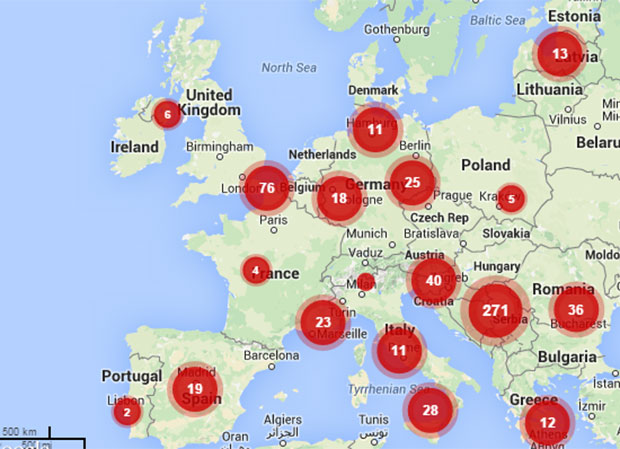
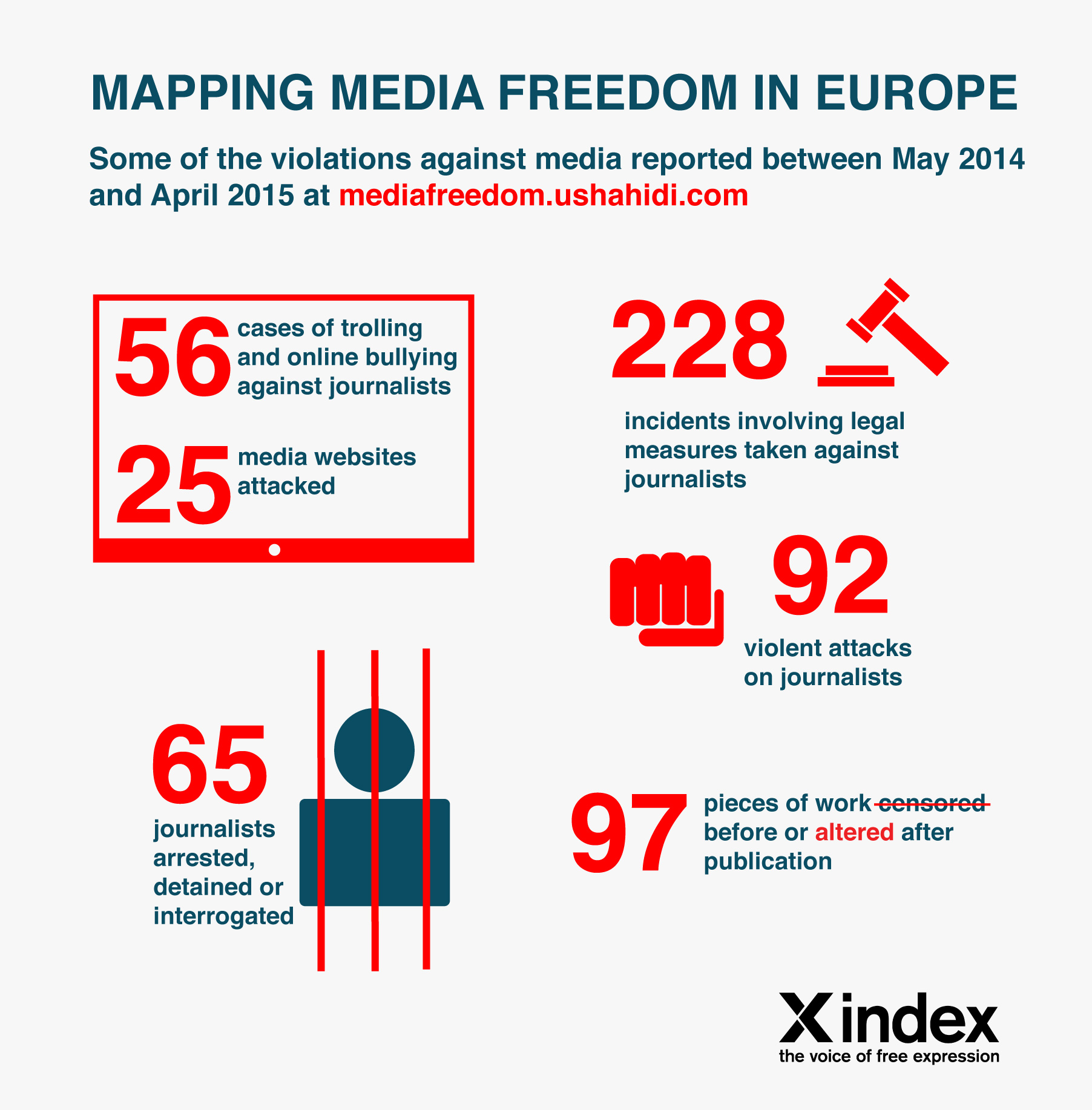
For the past year, Index on Censorship has been recording threats to media freedom in the European Union and candidate countries via its Mapping Media Freedom project. Since the mapping project was launched, over 760 reports — including 89 physical attacks on journalists — from across Europe have been verified and published.
Thirteen media workers have been killed in connection with their jobs. Journalists have been assaulted. Media workers have been threatened with death or bodily harm. Police and government officials have detained and interrogated reporters. Journalists have been burned in effigy, depicted as animals on billboards and subjected to online trolling. Newspaper articles have been spiked in opaque circumstances. Television programmes have been cancelled amid accusations of censorship. Extremist groups have attacked media offices while hackers have knocked news sites off the web. This is the Europe chronicled by the reports published to Mapping Media Freedom — covering European Union member states and candidates for entry — between May 2014 and April 2015. Taken together, these reports show that far from being an isolated problem, press freedom and media professionals face mounting pressure across the continent. |
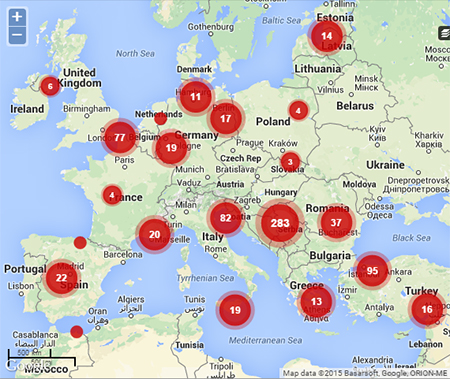 |
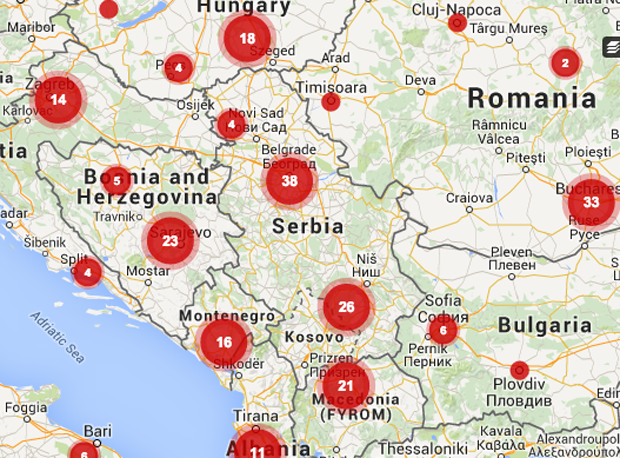
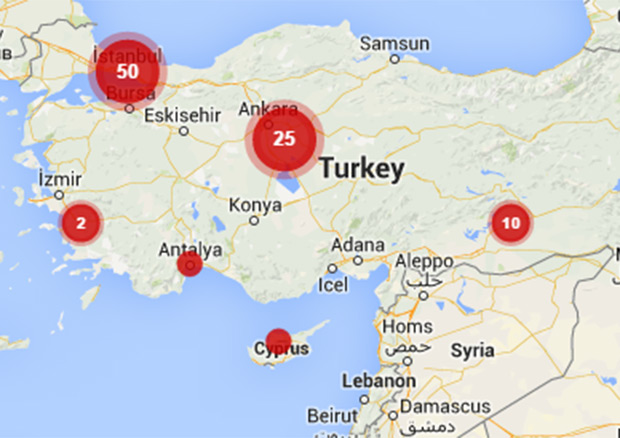
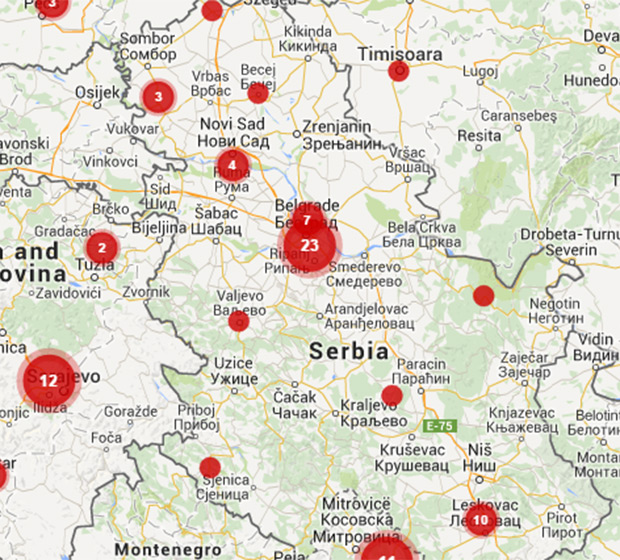
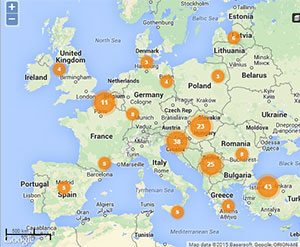
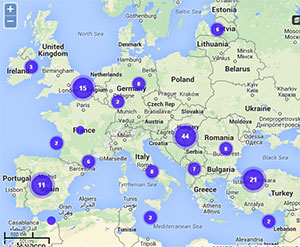
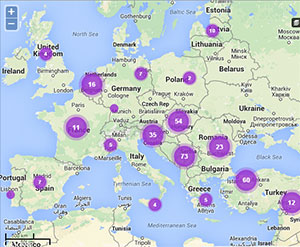
| While no country is immune from pressures on media professionals, the five countries with the most reports were EU candidate country Turkey (114), member state Hungary (93), candidate country Serbia (74), founding member state Italy (71) and founding member state Germany (48). The successor nations to the former Yugoslavia had a combined total of 174 incidents that were verified by correspondents attached to the project.
The map, which was co-funded by the European Commission, launched publicly on 24 May 2014 in cooperaton with Osservatorio Balcani e Caucaso and allows anyone — from members of the public to journalist unions — to submit reports for verification by Index’s eight part-time European Union correspondents. “The truly frightening thing is that the current 762 reports represent ‘just the tip of the iceberg’, as one of our correspondents put it. More awareness among journalists about media violations is needed, but the reports point to the scale of the problem”, Index Senior Advocacy Officer Melody Patry said. |
|
Countries with the most reports in 2014-2015The 10 countries with the most incidents reported to mappingmediafreedom.org as of April 21 2015. The project includes all European Union member states and potential candidates for entry. Cases cited are the most recent verified report for that country. |
 |
Turkey 114 reports Journalist and academic Osman Özsoy said on his Twitter account that he had been detained by counterterrorism police |
 |
Hungary 93 reports Miklós Borsa, a news anchor for Hungarian public television, was assaulted in the township of Balatonfüred |
|||
|
|
||||||
 |
Serbia 74 reports Photographer Senad Zupljanin was physically assaulted by a member of the Novi Pazar city council’s security detail |
 |
Italy 71 reports Sports journalist Matteo Spini was targeted with a banner, chants and threats in private messages and comments on social media |
|||
|
|
||||||
 |
Germany 48 reports The office building of the newspaper Die Leipziger Volkszeitung‘s (LVZ) regional bureau in Eilenburg, a small city near Leipzig, was vandalised |
 |
France 41 reports Journalist Simon Michel was attacked in Arles by bullfighting professionals while he was covering an anti-bullfighting protest |
|||
|
|
||||||
 |
Romania 39 reports Stelian Tanase, director of Romanian Public Television, wrote to the Romanian Intelligence Service requesting removal of undercover agents from his staff |
 |
Bosnia 30 reports News agency Patria was inaccessible for around 12 hours as a consequence of a hacker attack |
|||
|
|
||||||
 |
United Kingdom 29 reports More than 30 jobs have been made redundant or put at risk of redundancy by Newsquest |
 |
North Macedonia 25 reports Reporter and editor Borjan Jovanovski was sent a funeral wreath with “Final Greetings” written on it |
|||
|
|
||||||
Case StudiesAcross Europe, censorship and media violations take different forms depending on the country. These four reports are expanded from incidents that were logged to the map. Read more in-depth reporting. |
GermanyVandals lash out against local newspaper for reporting on right-wing extremists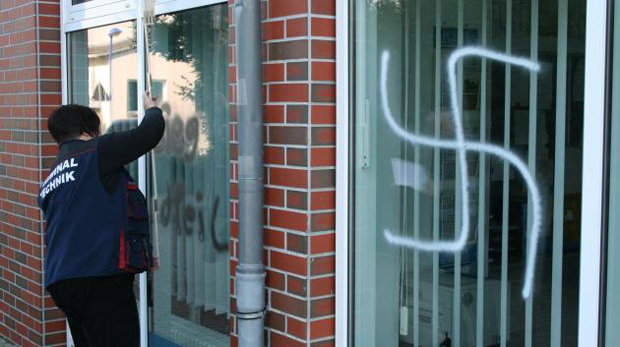 “People like to make journalists their victims and to take revenge out on them. Usually, somebody does something bad and the journalist who uncovers that becomes the face of the issue.” |
LithuaniaRussian language television network banned for “inciting discord”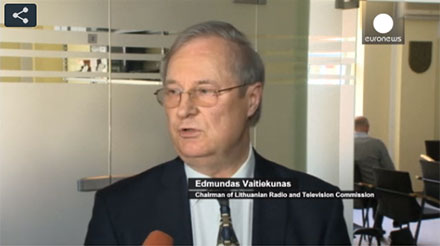 “It is the first time in the history of the European Union that a regulatory body has taken the decision to take the whole channel completely off air.” |
|
|
|
||
MontenegroJournalist groups call impunity the biggest threat to media freedom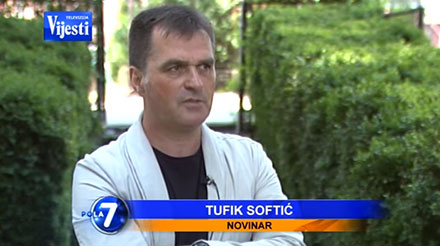 “Such an atmosphere of impunity threatens journalists in particular. If the state treats these attacks passively, it becomes responsible for the suppression of freedom of speech, the rule of law and democracy.” |
SerbiaFor Juzne Vesti editor, deteriorating media freedom comes as no surprise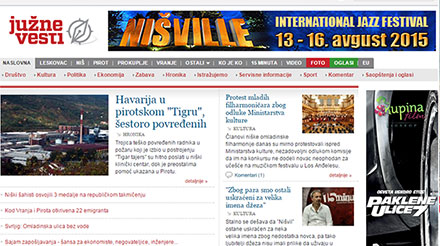 “The language from the 90s is back in Serbia. Again, journalists that criticise the work of the government or are reporting on corruption are labelled as foreign mercenaries.” |
|
|
|
||
Categorisation of violationsReports can be filtered by the 51 different labels used to organise the incidents reported to mediafreedom.ushahidi.com |
|||||
Legal measures
|
Censorship
|
Government threat
|
|||
Co-Funded by
|