All Posts By

Mapping Media Freedom

“You have to be brave to be a journalist in Serbia”

By | Features, Mapping Media Freedom, Serbia

Mapping Media Freedom

Investigative journalist Ivan Ninic knew something was wrong when he saw the two young men reach down. “I saw they were getting two metal bars,” said Ninic, who is the latest victim of violence against journalists in Serbia. Two young men, in tracksuits and baseball caps, assaulted him on a Thursday evening in late August, in Serbia’s capital, Belgrade. “They attacked me and stuck me brutally,” he told UNS, a Serbian association for journalists. “I have a haematoma under my eye, bruises on the thigh bone and an injury to my shoulder.”

Just a week earlier, at a Jazz Festival in the southern city of Nis, local journalist Predrag Blagojevic was beaten by a police officer for — in the words of the officer — “acting smart”. “He grabbed me, bent my arm behind my back and repeated several times ‘Why are you acting smart?’ Then he hit me in the head with his hand. Read More
Germany: Authorities leave bitter aftertaste in Netzpolitik treason case

By | Features, Mapping Media Freedom

Netzpolitik-sg

Over a month after the Berlin-based blog Netzpolitik.org was charged with treason for publishing leaked government documents, details are trickling out about the extent German authorities went to in order to build a case against the journalists running the website.

The German federal attorney general’s legal case turned out to be flimsy and ultimately collapsed on 10 August. Leading up to the decision to drop the case, public outrage soared over the treason accusation. Journalists associations jumped to the cause and a Berlin protest attracted thousands of supporters. Donations poured in to help the bloggers’ legal battle. Read More

Romania: Radio station dismisses veteran journalist

By | Features, Mapping Media Freedom
(Photo: Zoltan Sipos)

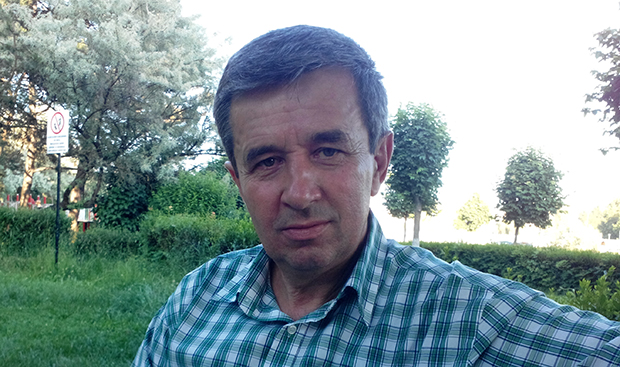
Vasile Luca (Photo: Zoltan Sipos)

Vasile Luca, a veteran journalist working at Radio Cluj, a Romanian public radio station based in Cluj-Napoca, was fired in May 2015 as a result of a disciplinary committee hearing.

Two months before his termination, Luca, who had been with the station for 25 years, went public with internal documents showing that a station employee, Debreczeni Hajnalka, who was also the press secretary for the head of a political party, was not actually completing any work despite an unusually high salary. Luca filed a complaint at the public prosecutor’s office and, after media coverage, Hajnalka resigned from the station. The station refused to disclose what Hajnalka’s job title had been. Read More

Lawsuit takes French media to task for Charlie Hebdo reporting

By | Features, Mapping Media Freedom
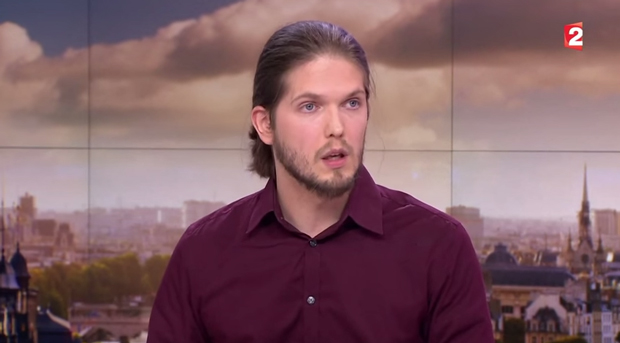
Lilian Lepere has filed a lawsuit against French media outlets for revealing where he was hiding during a standoff with the Charile Hebdo attackers. (Photo: YouTube / France 2)

Lilian Lepère has filed a lawsuit against French media outlets for revealing where he was hiding during a standoff with the Charile Hebdo attackers. (Photo: YouTube / France 2)

Graphic designer Lilian Lepère hid under a sink for eight hours while the Kouachi brothers, Saïd and Chérif, on the run after attacking Charlie Hebdo, occupied the printing house where he worked in Dammartin-in-Goële (in the Seine-et-Marne region). Believing it was empty, the brothers hid in the factory for several hours before being killed by a special operations unit of the French armed forces.

While the designer was hiding, MP Yves Albarello (Les Républicains), during an interview with RMC radio, revealed Lepère was in the building. Television channels TF1 and France 2 repeated the information. The Kouachi brothers, who had smartphones and a radio, could have easily discovered Lepère’s presence. Read More

The people investigating Serbia’s unsolved journalist murders

By | Features, Mapping Media Freedom, Serbia
DT49620

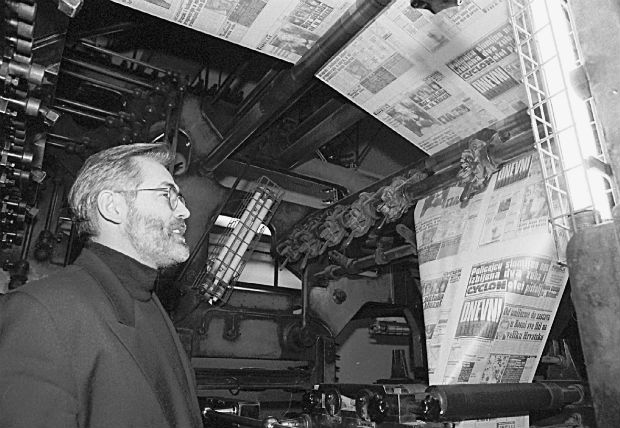
Journalist Slavko Curuvija, murdered in Belgrade in 1999 (Photo: Predrag Mitic)

As NATO bombs were falling on the Serbian capital Belgrade on 11 April 1999 , a man was being executed on a side street in the centre of the city. The victim was later identified as Slavko Curuvija, a prominent Serbian anti-regime journalist. A post mortem found that Curuvija had been shot in the back 17 times. Five days earlier the state-run daily Politika Ekspres had published an article calling Curuvija a traitor and a NATO supporter.

Fast forward to 1 June 2015: the trial of four former security officers begins before a special court in Belgrade. It took 16 years for anyone to stand trial over what had become a notorious case of intimidation of journalists in Serbia. Read More

Greece: Can reborn ERT deliver on the promise of a truly public broadcaster?

By | Features, Mapping Media Freedom

On June, 11 2015 the Greek public TV went back to its old name “ERT”, exactly two years after its abrupt closure by the previous conservative-led government.

In June 2013 the government shut down the TV station and fired some 2,600 media workers, accusing the public broadcaster of corruption and mismanagement. Although ERT’s “sins” and disfunction were well known, the real reason behind its brutal shutdown was to meet layoff quotas laid down by Greece’s international creditors.

A few months after shuttering ERT, the government opened the New Hellenic Radio, Internet and Television (NERIT), a shrunken public broadcaster that hired employees under 3-month contracts. The budget was cut from around 300 to 100 million euros. Read More