All Posts By

Mapping Media Freedom

North Macedonia: Journalist arrested while covering rally in Skopje

By | Features, Mapping Media Freedom, North Macedonia

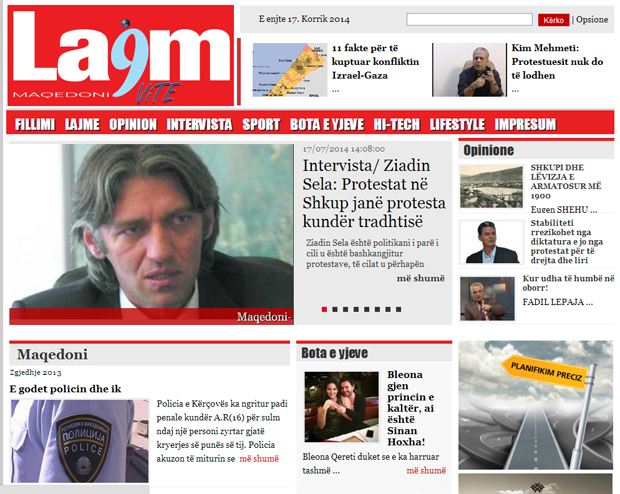
lajm-mediafreedom

Besim Ibrahimi, intern for the Albanian-language newspaper Lajm, was arrested on Saturday, 5 July during a rally against the jailing of alleged extremist ethnic Albanian Muslims for the “terrorist” murders of ethnic North Macedonians. The journalist was accused of taking part in the violent protests, while he was covering the rally under the instructions of his editor. Ibrahimi was released on Sunday, but the prosecutor has not yet decided if he will file charges against him or not.

“The policemen from the special units approached me and forced me to lie on the ground. When I told them that I am a journalist and I am here only to cover the protests, instead of releasing me, they beat me with batons and kicked me,” Besim Ibrahimi told Index few days after his prosecution. Read More
Changes at France Culture bring accusations of censorship

By | Features, Mapping Media Freedom

The decision not to air the last episode of Du Jour au Lendermain and recent budget cuts have critics up in arms over changes to the cultural arm of Radio France.

Alain Veinstein, a French writer and poet has been hosting the radio programme called Du jour au lendemain for 29 years on France Culture, a French public station dedicated to culture.

Olivier Poivre d’Arvor, director of France Culture, decided not to air Veinstein’s last show, dating from 4 July, unhappy that the host had decided to interview himself and not a writer, and to talk about what the end of his show meant to him. A programme dating from November was re-aired instead. Veinstein denounced “a rare case of censorship on the radio” while talking to Le Monde. Read More

Germany: Are online user comments protected by press freedom laws?

By | Features, Mapping Media Freedom

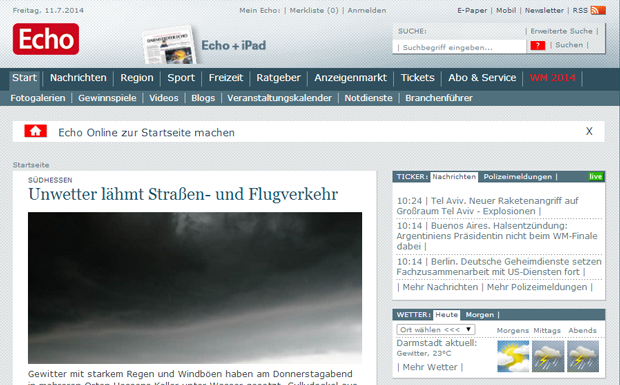
echo-germany

A local newspaper in the western German city of Darmstadt is at the centre of a legal case that will measure whether readers’ comments are protected by Germany’s press freedom laws.

On June 24, police and the Darmstadt public prosecutor arrived with a search warrant at the offices of the newspaper Echo. A complaint had been filed over a 2013 reader comment on Echo’s website. Months later, a local court issued a search warrant to force the newspaper to hand over the commenter’s user data. Read More

Hungary: Council of Europe shares concern over NGO audits

By | Features, Mapping Media Freedom

hungary-norway

Hungarian NGOs are facing a rough summer: The Government Control Office (KEHI) has launched a series of investigations into grants they received from the Norway Financial Mechanism. Now the Council of Europe’s Commissioner for Human Rights, Nils Muižnieks, has written to János Lázár, Minister of the Prime Minister’s Office to express concern over the situation.

Read More

Turkey’s media: A polluted landscape

By | Mapping Media Freedom, Turkey Uncensored

By Yavuz Badar

In the latest report, Freedom in the World 2013, Freedom House defines Turkey as ‘partly free’.

Authorities in Ankara – both the government and bureaucrats – refute these claims, although the Ministry of Justice openly admits that there are serious shortcomings when it comes to providing for freedom of expression, both in law and implementation.

Some international organisations, such as the Organization for Security and Co-operation in Europe (OSCE) and the European Federation of Journalists (EFJ), meanwhile, help build the myth that Turkey tops the world rankings for one of the worst ‘oppressive’ states because of the number of jailed journalists there. The Committee to Protect Journalists reports that there are 49 journalists in prison, while Reporters Sans Frontières put the number at 72, if the number of people includes all jailed media professionals. But claims that the country is entirely free or grossly oppressive are both wrong. These extreme views must be taken with a pinch of salt; the truth is somewhere in between.

Read more