All Posts By

Mapping Media Freedom

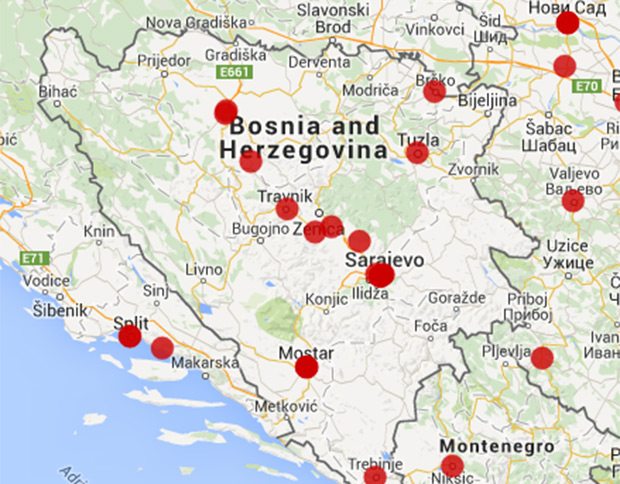
Bosnia: Police raid is “attack on the public’s right to know and to be informed”

By | Features, Mapping Media Freedom

Press organisations and representatives have strongly condemned a police raid on Bosnia news site Klix.ba that took place on 29 Dec. Authorities are trying to uncover the source of a recording that is said to be of the Republika Srpska Prime Minister Zeljka Cvijanovic.

During the recorded conversation a woman’s voice can be heard admitting that her party bought two MPs to ensure its majority in the national assembly. Read More

Bulgaria: Murky ownership, censorship and corruption in the media

By | Bulgaria, Features, Mapping Media Freedom

bulgaria

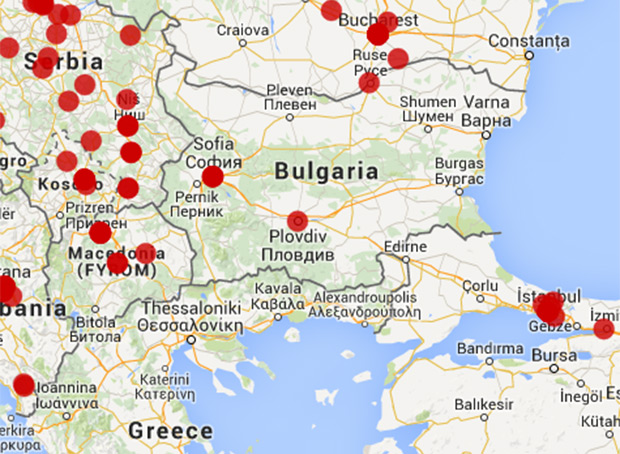
Murky ownership, a whole array of censorship practices as well as corruption are plaguing Bulgarian media, according to a survey from the Bulgarian Reporter Foundation.

The report, Influence on the Media: Owners, Politicians and Advertisers, is based on surveys with 40 media outlets carried out between January and September 2014. One hundred journalists and 20 media owners were questioned about their perception of censorship in the Bulgarian media.

The report found that journalists, senior editorial staff and owners are offered bribes by politicians and corporations. While these allegations are very difficult to prove, there is a widespread assumption among people working in the media that reporters in certain sectors receive regular payments from large companies to present them in favorable light.

“It is very hard to prove the (existence of) bribes”, said Dr. Orlin Spassov, one of the authors of the report, who is an associate professor in media and communication studies at Sofia University and executive director of Media Democracy Foundation. Read More

Hungarians take to the streets to protest “internet tax”

By | Features, Mapping Media Freedom
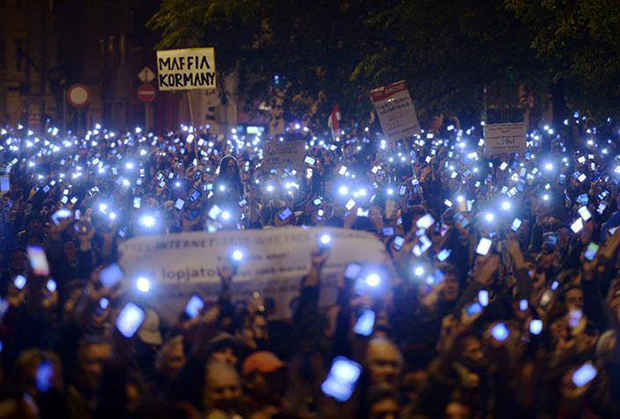
Hungarians gathered in Budapest on Sunday to protest plans to introduce a tax on internet bandwidth. (Photo: 100,000 Against the Internet Tax /Facebook)

Hungarians gathered in Budapest on Sunday to protest plans to introduce a tax on internet bandwidth. (Photo: 100,000 Against the Internet Tax /Facebook)

Barring a u-turn from the Hungarian government, demonstrators will return to the streets of Budapest this afternoon to oppose Prime Minster Viktor Orban’s plans to tax the internet

The draft law proposed by Orban’s government would levy a fee of 150 forints (£0.40; €0.50; $0.60) per gigabyte of data traffic. In the face of public outrage, ruling party Fidesz promised that the tax will be capped at 700 forints for consumers and 5,000 forints for businesses. However, this did not calm the angry protesters. Read More

Romania: Audiovisual Council paralysed in middle of election campaign

By | Features, Mapping Media Freedom
Caption goes here

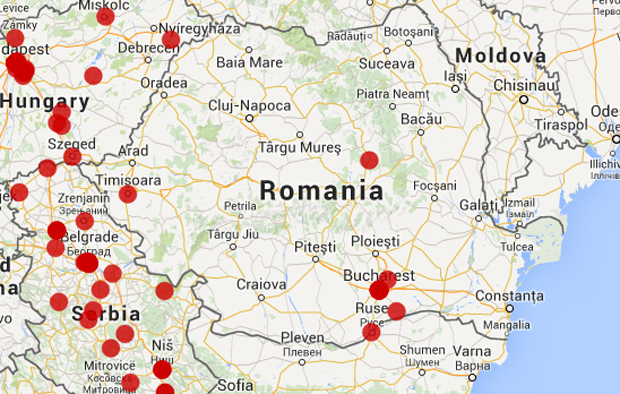
Map of censorship incidents in Romania via mediafreedom.ushahidi.com

In November, Romanians are set to head to the polls to elect a new president from a field of 14 candidates during two rounds of polling. But one important participant, the National Audiovisual Council of Romania (CNA), will be sidelined as it loses its legally mandated quorum.

According to the CNA’s website, its role is to “ensure that Romania’s TV and radio stations operate in an environment of free speech, responsibility and competitiveness.” Read More

Turkey: Erdogan tightens the digital screws on free expression

By | Features, Mapping Media Freedom
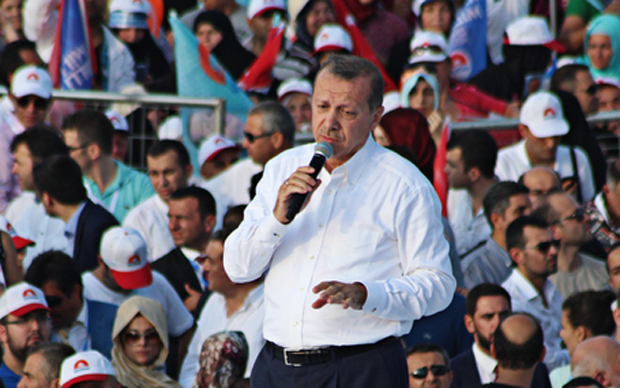
Former Turkish Prime Minister and current president Recep Tayyip Erdogan spoke to tens of thousands of supporters during a presidential campaign rally in Istanbul in early August. (Avni Kantan / Demotix)

Former Turkish Prime Minister and current president Recep Tayyip Erdogan spoke to tens of thousands of supporters during a presidential campaign rally in Istanbul in early August. (Avni Kantan / Demotix)

Seven months after a previous amendment was introduced to Turkey’s contentious 5651 law governing internet activity, new restrictions were passed late on September 8. Before the February amendments were signed into law by then President Abdullah Gül, a protracted approval process over the course of a few weeks helped bring attention to the proposals. In contrast to the online and street protests against internet censorship that preceded the amendments’ approval earlier this year, last week’s changes to the 5651 law were rushed through a vote before word could spread about them.

The newest restrictions are only two articles tucked into a lengthy omnibus reform bill: in a total of seven sentences, amendments number 126 and 127—part of a list of 146—succinctly make way for invasive data logging and the speedier blocking of access to websites. Read More

Curacao journalists’ lonely and dangerous battle against corruption

By | Features, Mapping Media Freedom
(Photo: )

Journalist Richeron Balentien woke up one night to find his car had been torched (Photo: Richeron Balentien)

It’s a Wednesday morning in May 2014, around 3am and still dark outside. Radio journalist Richeron Balentien, his girlfriend and their 2-year-old daughter are sound asleep until the smell of fire wakes them up. When they look out of the window they see Balentien’s car burning in the yard in front of the house. He immediately knows what is going on.

“It was a clear threat,” Balentien told Index on Censorship over the phone. “It was a warning, to shut me up.” The police confirmed the car was purposely set alight. The perpetrator has not been brought to justice.

The Netherlands is always found near the top of press freedom rankings, this year second only to Finland in the Reporters Without Border’s Press Freedom Index. But rarely taken into account, however, are the Dutch islands in the Caribbean sea. The largest of these, Curacao, became a constituent country of the Kingdom of the Netherlands in 2010.

If Curacao was included in the Netherlands’ press freedom score, it might not place so high on the list. Read More