All Posts By

Mapping Media Freedom

Croatia's Environment Minister Tomislav Coriććć

Croatia’s Environment Minister publicly discredits N1 TV journalist at press conference

By | Croatia, EU Member State, Europe and Central Asia, European Union, Features, News and features
Croatia's Environment Minister Tomislav Coriććć

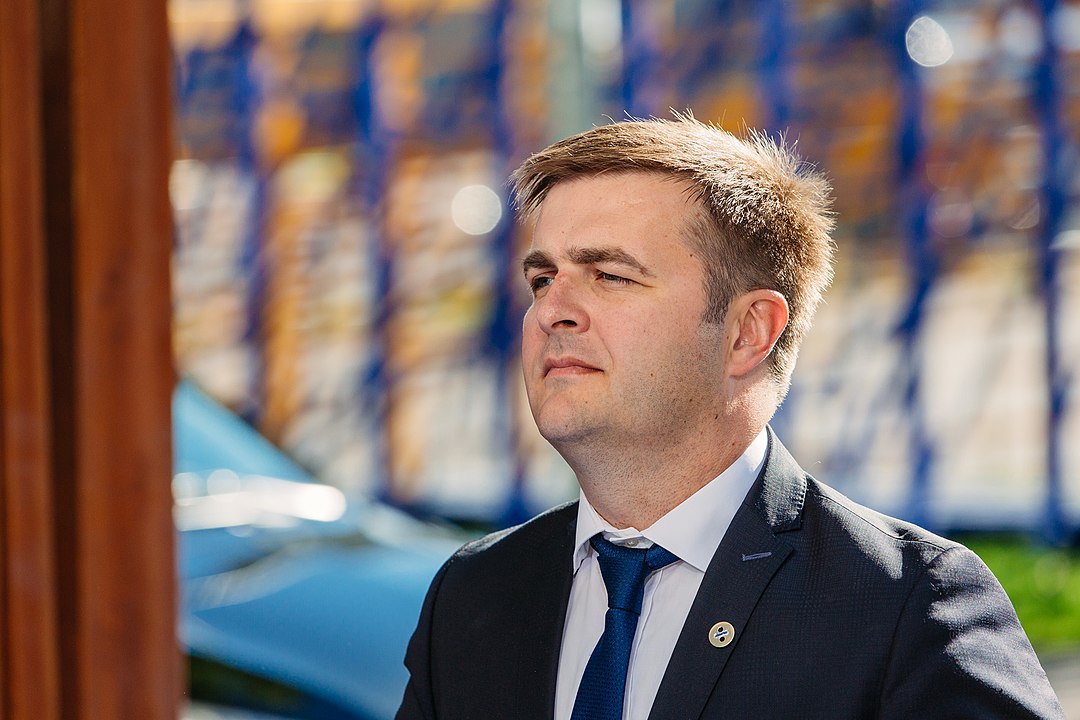
Tomislav Ćorić by Arno Mikkor https://bit.ly/2ZPjy0O

28/05/2020  by Giovanni Vale in Zagreb, Croatia
We were used to seeing certain scenes in authoritarian countries, where political leaders use press conferences to insinuate, intimidate, and discredit, sneering in front of journalists. This week it came to Croatia, the country that currently holds the rotating Presidency of the Council of the European Union. During a question and answer session with the press, Environment and Energy Minister Tomislav Ćorić attacked N1 television journalist Hrvoje Krešić citing what the reporter would have said in a private conversation. “I happen to know that...”, the minister said several times, before reporting the content of an exchange “between journalists“, of which he “happens to” be aware. A misstep? A misunderstanding? Unfortunately, even in the case of simple incompetence on the part of the minister (the content of the  conversation revealed is really of little interest), the technique used is certainly unworthy of a democratic republic.

INA, Croatia, and Hungary – the background

On Monday, the minister was called to comment on an issue of great importance for the country. It was about INA, the Croatian state-owned oil company, and in particular a memorandum of understanding signed in 2018 by Ćorić and revealed by the weekly Nacional in its latest issue. With the memorandum, the minister authorised the transfer to Hungary of the oil produced in the national territory, to be refined there rather than in Croatia. The fact has an important political implication, which can only be understood if one knows the recent history of INA in Croatian-Hungarian relations.
A very brief summary: INA is no longer 100% state-owned but, after being privatised in the early 2000s, is now 49% owned by the Hungarian MOL. The privatisation was facilitated by Prime Minister Ivo Sanader (in office from 2003 to 2009) who, at the end of last year, was sentenced to six years in prison for receiving a 10 million euros bribe from the CEO of MOL, Zsolt Hernadi. In return, Sanader arranged for MOL to obtain INA’s administrative rights. Croatian justice has obviously condemned Hernadi for corruption, but Budapest has always refused to extradite him.
Now, in Croatia INA controls two refineries, in Sisak and Rijeka. In recent years, MOL has made it known on several occasions that it plans to close the Sisak plant and to consider the same move for the Rijeka plant. The Plenković government, in office since 2016, has played the national interest card by promising to buy back the share of INA held by the Hungarians, but two months before the end of the mandate (the vote is scheduled on 5. July) it has yet to do something. Against this background, the revelation of a memorandum between INA and JANAF, the Croatian oil distribution company, which would facilitate the transfer of oil to Hungary sounds like a betrayal of the promises made.

The press conference

How then did Minister Ćorić respond to this thorny matter? By trying to publicly discredit anyone who questioned him. “I happen to know that you are dissatisfied with my choice of the members of the Board of INA “ Tomislav Ćorić told journalist Hrvoje Krešić  “and I also happen to know that you personally know one of those who have not been chosen”. Ćorić then called the journalist “a person marginally involved in the oil business”. How did he come to these conclusions? “Because in one of the groups that you journalists use to communicate, you have expressed criticism“, the minister replied to Krešić, adding “take a look at the messages you sent to those groups“.
“It is not the first time that such a thing has happened to me, but perhaps this is the most explicit case“, comments Hrvoje Krešić. In the past, the journalist recalls, in the span of 24 hours, he had been labelled as “pro-SDP” by Prime Minister Andrej Plenković and “close to HDZ” by Social Democratic leader Davor Bernardić. “In short, it is not uncommon for Croatian politicians to behave in this way. But I did not expect someone to insinuate one day that I would be on a payroll, corrupt“, continues the journalist. Does Krešić know which group the minister refers to? “I don’t know. There is a group moderated by the government spokesperson in which statements, press conferences are announced. We happen to comment on some announcements, sometimes mock them. But I’m not even sure I commented on the INA case on that group”, replies the N1 reporter.

Reactions from journalists’ associations and media freedom campaigns

The minister’s statements appalled the journalists in the room and sparked a chain of comments and criticism. It does not matter that Ćorić himself read those messages and that someone – maybe even a journalist – revealed their content. The minister decided to make them public, sending a message to Croatian colleagues: “Pay attention to what that you say among yourselves, because the government can find out“. Needless to say, such behaviour undermines the freedom of the press in the country, choosing intimidation and direct attack over transparency and dialogue.

After the press conference, Prime Minister Andrej Plenković defended his minister, assuring the public that his government does not engage in surveillance of communications between journalists, but that someone voluntarily gave Tomislav Ćorić that information. So, there is no surveillance system for journalists, but if someone reports their private communications to us, why not use them to discredit them? Ćorić himself chimed in to swear that “never in my life have I dreamed of infringing the privacy of a person, let alone a journalist“. “Simply”  he added “I received that information from journalistic circles“.

Hrvoje Zovko, president of the Association of Croatian Journalists (HND) was appalled:

“It is an unbelievable, outrageous move. What does this behaviour mean? That those who ask legitimate questions will be attacked? We are not satisfied with the communication with this government: many colleagues have never received answers to their questions, others are victims of ‘hybrid wars’, while the idea that journalists are guilty of everything is fostered in society“.

The HND is now asking the government to explain how the minister got that information and to be more transparent about the INA-MOL affair.

Calls for the Minister to resign

Meanwhile, the voices of those asking for the minister’s resignation rise from the opposition, including MP Bojan Glavašević (ex SDP, now independent) and the Možemo! movement, while Social Democrat leader Davor Berdardić describes the minister’s action as “a trick to divert attention from the shameful betrayal of national interests by Ćorić and Plenković”.
The media freedom campaign Reporters Sans Frontières also responded: “We are horrified by the fact that Minister Ćorić ‘happens to know’ what Hrvoje Krešić wrote privately to his colleagues and uses it to discredit the journalist. This is unacceptable behaviour on the part of a government of an EU member country that holds the presidency of the EU Council“, RSF pointed out.

This article first appeared on the website of Osservatorio Balcani e Caucasi Transeuropa and is reproduced with  permission. The publication has been produced within the project European Centre for Press and Media Freedom, co-funded by the European Commission. The contents of this publication are the sole responsibility of Osservatorio Balcani e Caucaso Transeuropa and its partners and can in no way be taken to reflect the views of the European Union.  The author’s views are his own. The project’s page
 

Journalist Sajid Hussain

Mystery of missing journalist found dead in Sweden

By | Features, Sweden, This Week
Journalist Sajid Hussain

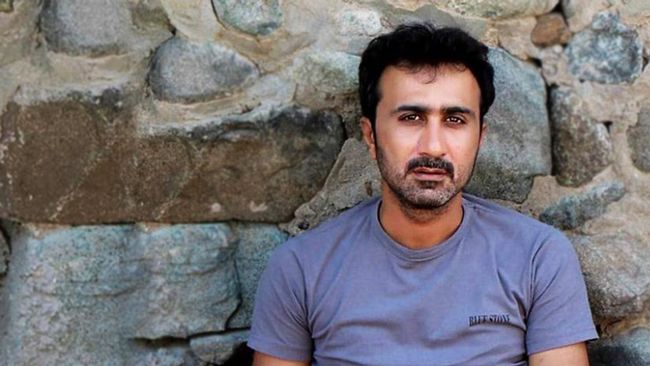
Sajid Hussain. Photo courtesy of Baluchistan Times

By Camille Petit and Jane Whyatt

Mystery surrounds the disappearance and death of Sajid Hussain Baloch, whose body was recovered from the river Fyris near Uppsala in Sweden on 23 April. Foul play cannot be ruled out, according to police spokesperson Jonas Eronen, who says “There are four possible lines of inquiry:crime, illness, accident of suicide.” But an initial autopsy was inconclusive. Forensic experts are continuing to investigate the cause of death and the reason for the 39-year-old journalist’s disappearance.

This much is known: Sajid Hussain took a train from the capital Stockholm to Uppsala on 2.March. He got the key to his room in the university hostel from the concierge, dropped off his bag and went out again. He is reportedly pictured on CCTV footage at a nearby petrol station. His body was found in the river Fyris.

Hussain was the editor-in-chief of the Balochistan Times, an online newspaper covering the troubled province of Baluchistan, in south-western Pakistan. He had left Pakistan in 2012 because he received death threats, after uncovering corruption and investigating the disappearance of government critics. Eventually, in 2017, he settled in Sweden and was granted political asylum. At the time of his disappearance, he was preparing to welcome his wife and two children to join him there and had just collected the keys to a new apartment.

However on 2. March 2020 he broke off contact with his colleagues at the University of Uppsala, where he was employed as a part-time lecturer and postgraduate student. The alarm was raised and he was reported as a missing person. Friends and colleagues started a social media campaign #FindSajidHussain and the Swedish Journalists Association appealed for help His friends and family believed he may have been self-isolating because of corona virus, although no lockdown or curfew was in force in Sweden at that time.

Tributes to a courageous journalist

Amidst the grief, there is praise for Sajid Hussain from former and current colleagues. Writing in The Diplomat, reporter Shah Meer Baloch describes Hussain as his journalistic mentor. He says Hussain was fearless but impartial:

Hussain was a ruthlessly honest writer, sensitive, imaginative, and with a political sense. His uncle, Ghulam Mohammed, who was killed in 2009, belonged to a hardcore nationalist political party, but Hussain’s emotions never overburdened his journalistic integrity. Baloch nationalists, separatists, and the military establishment — none escaped the wrath of his pen.”

In Sweden, Professor Carina Jahani  of the University of Uppsala was collaborating with Sajid Hussain on writing an English-Baloch dictionary and grammar book. She told the Media Freedom Rapid Response:

“Mr. Hussain had a truly scholarly mind and was a deep thinker. He was one of the most well read persons I have ever met and liked to discuss linguistic, literary and existential questions. He performed all his work with outmost care and dedicated himself fully to the development of the Balochi language, his mother tongue. His death is a huge loss, not only to his family and friends, among whom I count myself, but also to the Balochi language and literature. He left us far too early.”

Across the worldwide media freedom community, the case has caused grave concern. Lutz Kinkel, managing director of the European Centre for Press and Media Freedom, said:”Exiled journalists who have fled persecution have the right to expect protection in the country where they seek asylum. We urge the Swedish police to thoroughly investigate this case.”

And Ulrika Hyllert, speaking on behalf of the Swedish Journalists Association said: “Sad news. Our thoughts are with his family and friends”.

Anyone with information about the last movements, phone calls or online communications of Sajid Hussain Baloch is urged contact the Swedish Police Authority. In Sweden, the hotline number is 114 14 and for calls from abroad this is the code and number: 0046 77 114 14 00.

Journalists, whistleblowers and media workers under threat  can send details to the Media Freedom Rapid Response  All messages are treated as confidential.

Europe: governments go from custodians to violators of media freedom

Europe: governments go from custodians to violators of media freedom

By | Features

Is there much to celebrate this 2020 World Press Freedom Day?


By Faith Miyandazi/ECPMF

It is the responsibility of governments to guard their citizens and ensure their rights and freedoms are protected. Governments are to provide and guarantee a space where press and media freedom can thrive. Instead, increasingly in Europe and around the world, the custodians have become the biggest violators of media freedom and the freedom of information in general. On this 2020 World Press Freedom Day (WPFD), we struggle to find much to celebrate about a freedom that is increasingly under fire from all sides, mostly from governments. Yet, the importance of journalism and the freedom to seek, receive and impart information has never been more critical as we wallow in a global pandemic that is the coronavirus.

The Mapping Media Freedom (MMF) platform, which records alerts on threats to journalists and media workers and violations of media freedom across Europe, has governments, state agencies or public official(s) as the main sources of violation. Of the 6,254 (122,97%) alerts recorded on the platform from 2014 to date, 1,587 /31,20% came from governments, state agencies or public officials.

The number of violations is increasing across Europe with more and more journalists being intimidated and silenced using a number of methods, from discreditation to being sued through strategic lawsuits against public participation (SLAPPs) to strategically silence them.

The 2020 Annual Report by the partner organisations of the Council of Europe Platform to Promote the Protection of Journalism and Safety of Journalists, of which the European Centre for Press and Media Freedom (ECPMF) is a member, recorded a total of 105 cases of journalists in jail in the Council of Europe member countries at the end of 2019. Of these, 91 cases were in Turkey alone. This is a clear example where the protector – the government -has gone rogue on its own citizens. It left the report to conclude that: “In 2019, Europe was an intense and often dangerous battleground for press freedom and freedom of expression.”

The current coronavirus pandemic has worsened the situation, with the numbers of violations increasing. In March and April 2020 alone, the MMF platform recorded 23 cases of press and media violations related to Covid-19. Meanwhile, the 2020 Press Freedom Index by Reporters without Borders (RSF) showed a worrying trend for Europe citing that “Europe’s journalists face growing dangers.”

As the press and media freedom community keeps up the pressure on governments, inter-governmental institutions and non-state actors to stop the attack on media freedom and the freedom of expression, it is ECPMF’s wish this 2020 World Press Freedom Day (WPFD) that governments safeguard the overall freedom of expression as it is, after all, their duty to do so. This way, we will all bask in the sun that is press freedom, enjoy the right to information that to all of us must be given, and celebrate those journalists and media workers that work hard to ensure we stay informed. And honour those journalists that have paid the heavy price for telling and uncovering the truth, with their lives. For it is for these reasons that World Press Freedom is marked.

Vera Jourova

Newly launched Media Freedom Rapid Response briefs European Commission

By | European Union, Features, Hungary, Italy, Kosovo, Romania, Spain

Media freedom organisations have united under the umbrella of the Media Freedom Rapid Response (MFRR) and made their first contribution to the urgent debate on Corona-virus. It is urgent because there is a state of emergency to safeguard public health. But some governments are abusing this situation in order to stifle critical questions and pursue their own political agendas.

At a top-level online meeting the newly launched MFRR presented its findings on this critical issue to Věra Jourová, who is the Vice President of the European Commission for Values and Transparency.

The briefing of the Media Freedom Rapid Response

In the comprehensive documents provided, results drawn from the network of grass roots activists, non-governmental organisations and journalists’ trade unions showed a worrying picture. In Hungary, Serbia, Spain and Romania, new decrees and their interpretation by police and local authorities are having a serious impact on press and media freedom. The Media Freedom Rapid Response Co-ordinator Nik Williams commented:

“States across the European continent are responding to the COVID-19 pandemic in ways that have profound repercussions for media freedom and the safety and security of journalists and media workers. We thank Věra Jourová, the Vice President of the European Commission for Values and Transparency for speaking to us – the members of the Media Freedom Rapid Response.”

With the briefing, we aim to alert and inform European institutions so that press and media freedom and the rule of law are high on the agenda during the response to the global COVID-19 crisis.

EU Member States

Hungary

  • On March 30, the Hungarian parliament passed legislation handing Prime Minister Viktor Orbán sweeping new emergency powers to indefinitely rule by decree. The new law also criminalizes the spreading of “false” or “distorted” information which undermines the authorities’ fight against COVID-19 with fines and up to five years in prison. The law was strongly criticized by press freedom groups, who said it represents a step toward total information control and the further suppression of press freedom in the country.

Bulgaria

  • In Bulgaria, the government used the state of emergency decree to try to amend the penal code and introduce prison sentences for spreading what it deemed “fake news” about the outbreak with up to three years in prison or a fine of up to €5,000. While that part of the decree was vetoed by the President, another bill was submitted to parliament by a party in the ruling coalition on April 19 which, if passed, would hand authorities greater powers to suspend websites for disseminating “internet misinformation” – widening the scope of the law far beyond the immediate health crisis.
  • The government also doubled the amount of time for public bodies to respond to Freedom of Information (FOI) requests from 30 to 60 days.
  • Police forces have been given the power to obtain mobile data on those flouting lockdown measures without prior judicial authorization, raising privacy and surveillance concerns.

Romania

  • On March 16 the president of Romania signed an emergency decree which, among other measures, gives authorities the power to remove reports or close websites that spread “fake news” about the virus, with no opportunity to appeal.
  • The emergency legislation also doubled the amount of time to respond to FOI requests from 30 to 60 days. Since then, media have reported that local institutions have refused to provide information, citing the new rules.

Italy

  • On March 23, a journalist and a cameraman working for the Livorno edition of Italian regional newspaper Il Tirreno (The Tyrrhenian) were insulted and threatened with a metal rod while reporting on life under coronavirus measures.
  • On March 25, a photojournalist working for Italian newspaper La Stampa was surrounded by a crowd, harassed and had his SD card stolen while documenting a protest over coronavirus restrictions at a local market in Turin.
  • La Repubblica journalist Salvo Palazzolo has faced persistent threats after writing an article on April 8 about the mafia using the coronavirus crisis to increase his influence in certain districts of Palermo.
  • On April 2, the spokesman of Russia’s Defence Ministry, Major General Igor Konashenkov, sparked a press freedom row after he publicly criticized Italian newspaper La Stampa and issued a veiled threat against its reporter over an article about coronavirus aid, leading to condemnation from Italian journalists and authorities.

Slovenia

  • Slovenian investigative journalist Blaž Zgaga has been targeted by a hate campaign fuelled by the government and a pro-government TV station for submitting an official Freedom of Information Request to the authorities in Ljubljana about the government’s handling of the COVID-19 crisis.

Spain

  • The Spanish government faced strong criticism from several hundred journalists and several of the country’s leading newspapers over the system for media to ask questions during press conferences. The outlets denounced what they argued was a restrictive questioning format, in which submissions were written in advance and pre-selected by the government. A new system was introduced which allowed questions to ministers in a live communication and without intermediaries.

Croatia

  • Croatian journalist Živana Šušak Živković from the Dalmatinski portal was assaulted and injured by a group of worshippers while reporting on an Easter Mass near the city of Split that was being held illegally despite the COVID-19 lockdown.

Germany

  • The German government has also introduced controversial measures which have given authorities permission to analyse aggregated and anonymized location data in order to track the spread of COVID-19, raising concerns among rights groups about privacy and surveillance issues.

EU Candidate Countries

Turkey

  • On March 20, journalists Mustafa Ahmet Oktay and Eren Sarıkaya from Bartın-based Halk Newspaper and Pusula Newspaper were taken into custody over a report published about the spread of COVID-19.
  • On March 25, journalist Tugay Can was accused of “creating fear and panic amongst the public” over coronavirus news coverage.
  • On March 31, Kurdish journalist, writer and activist Nurcan Baysal was summoned by the police to testify for sharing prisoners’ letters and two articles on the pandemic.
  • On March 31, Oktay Candemir, a local journalist for Van Haberdar, was called to testify for his social media posts on the spread of COVID-19 in the region.
  • On March 31, a police investigation was opened against Mezopotamya News Agency correspondent Ahmet Kanbal, who was accused of “inciting hatred and enmity” in a news report about coronavirus safety measures in a hospital.
  • On April 3, Hakan Aygun, a veteran Turkish journalist who used to lead the staunchly anti-Erdogan television channel Halk TV, was arrested for inciting hatred with a social media post that demeaned President Erdogan’s campaign to raise funds for victims of coronavirus.
  • Radio and Television High Council (RTÜK) issued broadcast bans to Fox TV for three nights on prime-time news over anchor Fatih Portakal’s critical comments while reporting the state’s Covid 19 policies. Fox TV was also fined 3 % of its advertisement revenue.
  • On April 13, the parliament passed legislation allowing for the early release of up to 90,000 prisoners in a law that excluded those convicted of terrorism related crimes that have been used to imprison up to 50 journalists for their critical journalism. It also excludes those on pre-trial detention who are not convicted of any crime.

Serbia

  • In Serbia, the government initially issued a decree penalizing local institutions from releasing information to media about the coronavirus outbreak that was not “authorized” by authorities in Belgrade. The directive, which was later reversed, was partly responsible for the arrest on April 1 of Serbian journalist Ana Lalić of online news portal Nova.rs, who wrote about conditions for staff dealing with COVID-19 in a city hospital.
  • Since her release, Lalić has received several serious threats, calls for prosecution from pro-government media, and been targeted in an online smear campaign branding her an enemy of the state.
  • On March 26, a TV crew of the KTV station was also arrested for allegedly failing to undergo mandatory disinfection while trying to enter an administrative building to conduct an interview about a land sale being conducted during the COVID-19 lockdown.
  • Journalists have also been barred from attending the country’s daily COVID-19-related press conferences by the government. Media are only able to submit questions via email, rather than video call, with no follow up questions permitted. Other journalists have criticized the lack of access to information from ministers and health officials.
  • FOI deadlines have also been suspended during the state of emergency.

Albania

  • On March 23, Albanian Prime Minister sent citizens an intrusive voice message through Vodafone advising people to wash their hands against coronavirus and “protect themselves from the media”.
  • On March 23, Ora News journalist Elio Laze was threatened aggressively by a private construction company worker for filming work in violation of the country’s COVID-19 curfew.

Potential Candidate Countries

 Bosnia and Herzegovina

  • On March 19, the government of Bosnia’s predominantly Serb-populated entity, Republika Srpska, introduced fines and other punitive measures for spreading “fake news” in the media and on social networks.
  • The Association of BH Journalists has also criticized what it says is a restrictive system for journalists asking questions to ministers and health bodies.

Key considerations

During the ongoing COVID-19 health crisis, the need for the free flow of independent news is more essential than ever. Independent media is playing a central role in ensuring citizens have access to reliable, accurate and updated news about the pandemic. Moreover, in a period when our citizens’ fundamental rights are being suspended, journalists are also acting as a key watchdog in maintaining public scrutiny and debate on the adequacy of government measures.

Unfortunately, at the same time, some governments in both EU member states and candidate countries have opportunistically taken advantage of emergency coronavirus legislation to push through restrictions which erode press freedom. While some of these measures have threatened press freedom unintentionally, others have been implemented knowingly. Likewise, while some curbs on fundamental rights may be necessary to combat the pandemic, those limiting media freedom are excessive.

Most concerning, while some of the restrictions due to the coronavirus will be temporary, others risk being extended long after the health crisis is over. If European institutions do not push back against these threats strongly, media freedom in Europe could emerge from COVID-19 in a very different state of health to that it entered in.

Ms Jourova thanked the Media Freedom Rapid Response team for their research and commitment and encouraged them to engage with the wider public and local media outlets

This briefing was produced by the International Press Institute as part of the Media Freedom Rapid Response (MFRR), supported by the European Commission, which tracks, monitors and responds to threats to journalists and violations of press and media freedom across Europe. It is an alliance of seven media freedom organisations, funded by the European Commission.

  • ARTICLE 19
  • Committee to Protect Journalists (CPJ)
  • European Centre for Press and Media Freedom (ECPMF)
  • European Federation of Journalists (EFJ)
  • Free Press Unlimited (FPU)  
  • Index on Censorship
  • International Federation of Journalists (IFJ)
  • Reporters Without Borders (RSF)
    Seven NGOs make up the Media Freedom Rapid Response

    The Media Freedom Rapid Response is an alliance of orgnisations working together.

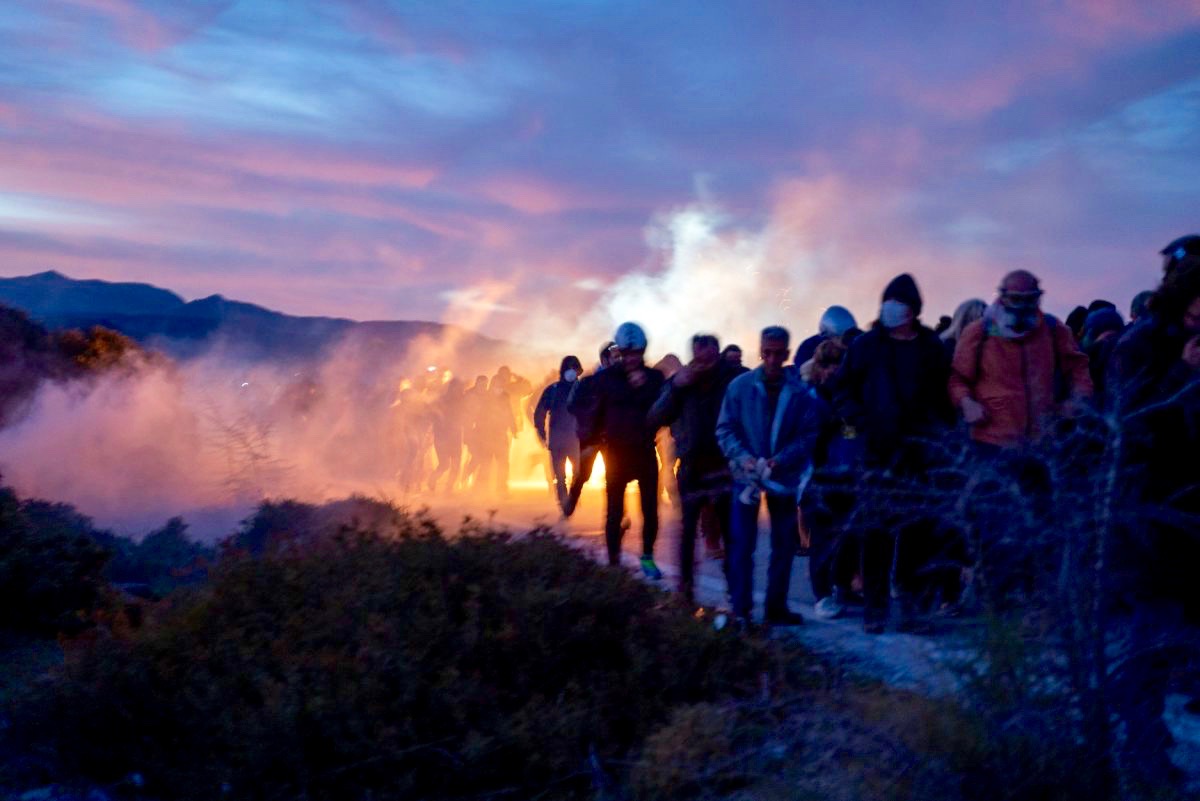
Journalists and refugees were attacked by right-wing gangs on Lesvos, March 2020. Photo: Erik Marquardt

EU must defend human rights, says MEP who faced death threats on Lesvos

By | European Union, Features, Greece, Hungary, Mapping Media Freedom, Media Freedom, News and features

By Jane Whyatt

Threatened with death and detained by police when he tried to report attacks on a journalist, Erik Marquardt has felt at first hand the abuses of human rights on the Greek island of Lesvos.

Journalists and refugees were attacked by right-wing gangs on Lesvos, March 2020. Photo: Erik Marquardt

Violent scenes on the Greek island of Lesvos, March 2020. Photo: Erik Marquardt

The former photojournalist, who now represents Berlin as a Green Member of the European Parliament, has been living on the island since the beginning of February 2020. He witnessed violent scenes, where right-wing gangs attacked refugees and journalists and riot police fired tear gas.

“I myself was threatened by some people. They said they will kill me and put me where my mother will never find me”

Yet when Marquardt reported the threat to the police, they did not arrest the men but took the MEP to the police station with a reporting team from Deutsche Welle.  The police commander shouted at them and ordered them not to go to the beaches again nor to observe the work of the coastguards.

Marquardt comments that “it seemed the police were kind of supporting these racist attacks, doing nothing against them and acting against the journalist who was there with me.”

After the attack on journalist Micheal Trammer Marquardt helped him to get hospital treatment for a head wound. He also witnessed threats and violence against aid workers. Right-wing extremists from across Europe travelled to Lesvos when the Turkish border was briefly opened and hundreds of refugees started to arrive in small boats, only to be beaten up by the gangs. Mapping Media Freedom has verified and published a number of other attacks on media workers during this period when reporting teams came under pressure from right-wing thugs who tried to prevent them from reporting the facts on the ground.

Corona virus brought new threats

With the outbreak of the corona virus the situation worsened, says Marquardt, since on 1. March Greece stopped allowing new asylum claims. He warns that during this health crisis, the European Union must show solidarity or risk breaking up.

“We have a situation where governments do not respect human rights, rule of law or press freedom any more.  The power of our European democracies is that we solve our problems in the framework of laws which are given to us by a majority of the parliaments. This is not some hypermobilised idea by some hippies, to have human rights or rule of law. It’s the only sustainable answer.“

The Green MEP, who is a deputy member of the Parliament’s LIBE  Committee on law and civil rights, said the Commission should use the Article 7 sanctions procedure to uphold rule of law and human rights, and noted that the corona crisis is also an economic crisis, so that EU bailout funds and grants to Member States could be made conditional on upholding European values. Erik Marquardt is staying on Lesvos during the lockdown to prevent the spread of corona virus. He is in touch with President Ursula van der Leyen and urging the European Commission to rescue refugees from overcrowded conditions, perhaps by using cruise ships and hotels that are lying empty because of the travel bans.

‘Absolutely unacceptable’ emergency powers

Meanwhile the Chair of the European Parliament’S LIBE Committee on law and civil rights, Jose Fernando Aguilar, has condemned the move by Hungary to criminalise people who spread “disinformation” with the threat of up to five years in prison. Aguilar said it was “absolute power to rule by decree by Orbàn, with no time frame, which is absolutely unacceptable.“ Hungary’s government spokesperson Zoltan Kovacs retorted in a tweet that “Hungary upholds EU values, rule of law (and) press freedom”.

Read the full background to Hungary’s emergency powers in this article by Agnes Urban.


View of Hungarian parliament building at night

Independent media in Hungary under pressure in COVID19 crisis

By | COVID_19, Features, Free Our Media, Hungary, Mapping Media Freedom, Media Freedom, News and features

The coronavirus gives rise to a healthcare and economic crisis, while in Hungary the very survival of the independent media is in serious danger. The media freedom community is urging governments not to use the emergency to undermine democratic rights.

View of Hungarian parliament building at night

Hungary’s parliament building at night. Photo: PIxabay

By Ágnes Urbán

The coronavirus is shaping up to deliver a devastating blow to the viability of independent media in Hungary. Business models that were tenuous at best already prior to the current crisis are near certain to fail soon, and their collapse will bury the media outlets whose long-term viability they had been meant to ensure under their ruins. Ad campaigns will come to a halt and the crisis is going to leave many households in a position of major financial distress and uncertainty, thereby reducing their budgets for media consumption. This could jeopardise the operations of the few remaining independent newsrooms rather quickly. They may be hit by the full brunt of the crisis as early as two or three months from now, especially since most of them are not backed by a well-capitalised owner.

Yet, imminent financial collapse is not the entire range of existential threats they are facing; it is conceivable that even before they succumb to the seemingly unavoidable economic tsunami coming their way, independent Hungarian media outlets could cease to exist. The events of the past days have foreshadowed the distinct possibility that the governing party might use the current situation to make a major move against independent media in Hungary.

In the early stages of the coronavirus crisis, news about the pandemic primarily filtered in through reports about the international situation. Just as in other countries of Europe, reports about the coronavirus became increasingly prominent in the Hungarian news coverage in connection with the escalation of the crisis in northern Italy. Hungary was different from other European countries, however, in that this escalation was mostly covered by independent media only, while the massive pro-government media empire that controls large segments of the market sought to downplay the issue.

One very instructive example is an op-ed by András Bencsik, the influential editor-in-chief of Demokrata, a leading right-wing weekly which Viktor Orbán had endorsed to his followers as one of the newspapers they ought to subscribe to:

“A massive pandemic indeed. At least as it is presented in the media. As if they were conducting a worldwide experiment to find out whether through force of sheer propaganda people could be made to believe in the threat of some horrible pandemic, even though there is no epidemic at all, not even the faintest sign of it. And the answer to the underlying question is ‘yes,’ they do come to believe it.”(March 6, 2020)

After a while even the Hungarian government began to grasp the severity of the situation, however, and proclaimed a state of emergency on March 11; from that point on, pro-government media also began to take the situation more seriously. Nevertheless, the Hungarian media remained and in fact became increasingly divided in its coverage of the crisis. The government and pro-government media focused near exclusively on a few Iranian students and sought to frame the entire coronavirus epidemic as a problem stemming from migration.

Independent media, by contrast, pointed to systemic problems in the Hungarian government’s handling of the epidemic, such as the low number of tests and the shortage of protective clothing and masks. It was only thanks to independent media that the public was informed that even while the governmental communication relentlessly and exclusively focused on a few Iranian students when discussing the corona epidemic in Hungary, days before the Iranian students had been quarantined a young Hungarian had asked to be tested. And even though the hospital where he reported refused to test him, his father soon became the first official corona patient of Hungarian nationality. Subsequently, independent media outlets uncovered many other cases that highlighted problems with the testing protocol and the lack of protective equipment available to healthcare workers.

Many citizens only became more cautious in managing their personal exposure after reading news reported by independent media. As a result of these reports, many media consumers opted to voluntarily follow social distancing protocols, while a growing number of private companies steered employees towards working from home. None of the articles reported by mainstream independent media outlets have thus far been refuted as fake news, and so their articles and reports on the issue have helped the public realise the severity of the situation we are facing.

In the context of the coronavirus crisis, the government’s most spectacular attack thus far against the independent media occurred on March 15th, at a press conference by the government spokesman Zoltán Kovács. In response to a question by a journalist of the online newspaper 444.hu, Kovács aggressively lectured the reporter that 444.hu and other independent media should not try to act smarter than the epidemiology experts.

Incidentally, the reporter’s question had referred to the corona testing of the minister of the interior, Sándor Pinter. The journalist inquired about the protocol used as the basis for testing the minister, and he also wanted to know why the healthcare staff who had treated corona-infected patients were not being tested. The government spokesperson failed to provide a substantial answer to the question. (The absurdity of the situation was further amplified by the fact that March 15 is a national holiday in Hungary, the Day of the Free Press, which made the spokesman’s skirmish with the free press especially poignant).

Another remarkable event took place on March 18th, when the pro-government media reported in detail that two prominent independent online newspapers, index.hu and 444.hu, had launched fundraising campaigns to help weather the financial impact of the crisis. The vulnerable financial situation of these two media outlets is already well-known and their efforts to raise funds in this situation are readily understandable. Nevertheless, the online newspaper origo.hu, whose ad spaces are filled to the brim with government-sponsored advertising, commented as follows:

“And Index wants to take money out of people’s pockets in such a delicate situation so that they can continue to spread fake news about their two favourite issues, education and healthcare.”

The criticisms concerning the fundraising by the above-mentioned independent media outlets were also echoed by the state media in Hungary; the state media added another independent news site, 24.hu, to the institutions being attacked in this way, claiming that it, too, disseminates fake news. The attack on the independent media reached its first peak on March 20th, when the pro-government news channel HírTV (which is part of the Central European Press and Media Foundation, the organisation that comprises most of the privately-owned pro-Fidesz media outlets) invited two pro-government opinion leaders, Márton Békés editor-in-chief of Kommentar journal and Gábor Megadja, the senior researcher at the pro-government Századvég institute, as guests on one of its talk shows. Almost their entire conversation centred on inciting the viewers against independent media, including such comments:

“We need to make up our minds about who we are actually rooting for. My sense is that certain pro-opposition channels are not rooting for the Hungarian nation; nor for Europe overall or even the Hungarian economy. They are openly rooting for the virus instead. And if that is the case, they are clearly coronavirus collaborators. What are we going to do about this, how will we deal with this situation later – well, let me stop here and not continue this line of thought.” (Starting at 4:37 in the video – Hungarian)

“I would suggest to have them arrested in this crisis situation.” (Starting at 9:27 in the video – Hungarian)

These are striking instances of incitement against independent media. They have sunk to levels that are far worse propaganda than what was “customary” in the public communications of the government and its allied media outlets. For a start, the pandemic has raised the stakes, which are now far higher than normal. At the same time, the criminal law repercussions that now accompany these verbal intimidations, specifically the risk of arrest, give these ominous comments an entirely different feel. They make the threats more concrete and palpable. In an article entitled With knowledge of our responsibility, Péter Magyari, a journalist at the online newspaper 444.hu, rejected the accusation that he and his newspaper were proffering propaganda and said that they fully comply with professional standards in the performance of their journalistic duties.

The real threat is not the ostensible and growing acerbity of the communication between independent journalists and the pro-government propagandists. The planned amendment of the Criminal Code is a fundamental stumbling block that government plans to put in the way of journalism. In fact it is an impediment to human communication in general:

“Whoever presents a false claim of fact or an actual fact in a distorted manner, or spreads such claims at the time when the emergency legal order is in effect, and does so in public, with the result that the underlying claims impede the effectiveness of the protection efforts, or cause the outright failure of the latter, is liable of a criminal offence that is punishable for a term of imprisonment between one and five years.”

Five years in prison for reporting the facts

Effectively, the planned amendment would submit everything that may be written or broadcast by media to the straitjacket of the government’s communications strategy, which would serve as the guideline to determine what may be freely written and what merits a prison sentence. This would be problematic in and of itself, but the problem is at least somewhat mitigated when the state’s communication is transparent and disseminates real data. In the Hungarian reality, however, when the government’s communications strategy is to continuously conceal the actual scope of the epidemic in Hungary because that appears to pay off politically, journalists will not be at liberty to report the real situation even if several independent sources unanimously confirm it, when they have reliably verified the information they wish to disseminate. Any publication of information could be accused of portraying the underlying figures out of context, of distorting the facts. And even if the courts eventually acquit the journalists after months or years of protracted legal wrangling, this regulation will nevertheless be very effective in curbing journalists’ and media owners’ willingness to go out on a limb in researching or publishing stories. To put it succinctly, if journalists write the truth, if they take their obligation to inform the public seriously, they may face up to five years in prison.

In light of the fact that the government side considers all actual news uncovered by independent media as fake news, there is a real danger here that the new regulation will not be used to sanction those who actually produce or disseminate fake news, but to effectively make independent journalism impossible. Looking at the government’s communication in recent days, all we see are proclamations that tout the presumably successful and effective governmental efforts, the effective action taken against the epidemic.

Yet this overall picture of comprehensive success is marred by articles and reports which identify systemic-level problems in the defensive mechanisms deployed to safeguard Hungary from the epidemic. Clearly, the public dissemination of media reports highlighting the shortcomings of the government’s policies against the coronavirus constitute a political risk for the governing party. Moreover, it is unnecessary for the government to classify any news items as fake news, since in an emergency “the operations of business organisations may be subject to the control of the Hungarian state by force of decree” (Act CXXVIII of 2011 on Disaster Relief and on the amendment of individual laws relating thereto, Article 48 (1)). What this means is that once the new emergency legal order enters into effect, the state theoretically has the right to take control of any newsroom whatsoever. The situation is further complicated by the fact that the necessity and the proportionality of such decisions – which are the criteria laid out in law – are practically impossible to define.

Parliament to be suspended

On March 23rd, a proposal was published on the parliament’s website that would effectively grant the Hungarian government unlimited powers and would suspend the Hungarian parliament until the end of 2020. Furthermore, the period in question could be extended even further if the government so decides, which could easily leave us in a situation akin to the one we have been witnessing in the context of the government’s proclamation of a state of crisis stemming from mass migration (the migration emergency), which was first declared in 2016. Although the conditions that qualify for a migration crisis have long since ceased to apply in Hungary, the government has been extending the relevant state of emergency as a reflex action every six months.

The emergency legal order proposed by the government could serve to irremovably entrench the government in its position while its most important controlling body, the Hungarian National Assembly, is removed from the equation, and the legislature’s functions are assumed by the executive, which rules by decrees. This could go on for as long as the government wishes, since during this prolonged state of emergency elections cannot be held either. Such a decision would spell the end of parliamentary democracy in Hungary. It would hardly be a surprise if independent media were among the first victims of this new legal order. At the same time, the experience of the past ten years has shown that sooner or later every rule-of-law institution in Hungary would be affected by these changes.

This article was first published in Mérték Médiaelemző Műhely2020. March 24. It is reproduced with kind permission of the author Agnes Urban and of Mertek.