All Posts By

Mapping Media Freedom

#ReportIt: Reduction of press freedom as the price for EU border security?

By | COVID_19, European Union, Features, Greece, Greece, ReportIt

Interview with Franziska Grillmeier (translated) for World Refugee Day

ECPMF: Franziska Grillmeier, you have been working on the topic of refugees and migration for a long time and live on the island of Lesvos in Greece. For some years now, most people have been familiar with this island, especially with regard to the Moria refugee camp, which burned down last year in the fall.

June 20th is the annual World Refugee Day. Among other things, you report primarily with migration and refugees at Europe’s external border. What journalistic challenges does this particular area bring?

Franziska Grillmeier: We are seeing a dismantling of the rule of law, with regard to refugee rights, such as brutal pushing back at the borders or asylum procedures that are no more than façades. But we, as the press, actually have hardly any access to document this anymore. I’ve been on the island [Lesvos] now since the summer of 2018. In the beginning, I could just be there when a rubber dinghy arrived, there was access to courtrooms and the Moria camp. I could meet people, talk with them in their tents for hours about their life, about their current circumstance. Three years later, this is no longer possible. Since 9th September 2020, when Moria burned down, I can only enter the camp with a police escort. The international press was admitted to the new temporary camp only in rare, guided press tours. As a result, dignified, independent reporting is no longer possible.

We see the same thing with the court cases. The so-called arsonists of Moria were sentenced to ten years imprisonment, during which national and international press representatives or human rights observers were not allowed in. Only 15 people were allowed in the courtroom.

These are always cases where it becomes enormously difficult to get through to people and do your own work.  Like after the fire, when over 10,000 people were trapped and the police wouldn’t let us through for alleged security reasons. We had to find alternative paths and routes through the olive tree fields to talk to the people. Here we can see a deliberate restriction of freedom of the press.

ECPMF: The exclusion of the press from the trial about the fire in Moria was explained by the authorities by Corona hygiene restrictions. How can it still be guaranteed that the reporting is accurate if you can’t do your own research on-site?

Grillmeier: That is an important question. In the case of the court verdict, I naturally speak with the lawyers, since I cannot speak with the defendants and get a picture of the proceedings and atmosphere.

There are often reports of witnesses being intimidated by an overly large police presence, of a rude tone and racist remarks by the judiciary in the courtroom. At this trial, the four young Afghans, including three minors, were identified by a key witness who was not even present in court. Moreover, none of the invited 15 prosecution witnesses in the courtroom could confirm having seen the defendants on the alleged night of the crime. These are all things that violate fundamental rights.

As journalists, however, it is difficult for us in retrospect to reconstruct everything exactly, since we were not admitted to the courtroom.

ECPMF: It is also difficult to report freely in other places. It was only in April of this year that media professionals were able to visit the new camp. How do you assess the situation of press freedom here?

Grillmeier: I used to be in Moria almost every other day, sitting there for hours and eating with people and also allowing silence. I am a trained reporter, I need these nuances. These are no longer possible when we meet at the supermarket parking lot, where the camp residents are still allowed to stay.

Crouching next to shopping carts to conduct an interview with a torture survivor does not work and often leads to enormous retraumatization. There is no safe space.

Voices are vehemently restricted, media professionals are rigorously intimidated.

ECPMF: How did the last press conference in the camp go?

Grillmeier: The last time in the camp was for 30 minutes in a group of 30, 35 other media people who all tried to take photos very quickly. The camp residents were not informed, they didn’t know who was interviewing them, we weren’t allowed to introduce ourselves, we weren’t allowed to talk to some of the people. The press representatives of the Ministry of Migration repeatedly dragged me away by the sleeve. This is no way to get a picture of the situation.

People are supposed to become more and more like ghosts. They are removed from the public eye, while the narrative is pushed that everything is under control. Voices of camp residents are vehemently restricted, as are those of media professionals, who are rigorously intimidated. This is like a legal limbo in which the refugees find themselves.

Lack of transparency, unanswered inquiries, arrests

ECPMF: What role do political institutions like the Greek government and the EU play in the changing situation of press freedom?

Grillmeier: There is a basic feeling of being pushed into the corner of fake news by the Greek government. At a press conference in March, Migration Minister Notis Mitarakis and EU Commissioner Eva Johannson faced the national and international press after the EU gave money for five new high-security camps on the Aegean islands. The government was asked about illegal push-backs that have been proven to take place in the Aegean time and again. This was called ‘Fake News’ and that we should do our job properly. Often there are outright defamation campaigns, in the course of which one is accused of [being] “lügen presse” [English: the lying press].

This is a climate in which quite open criticism is no longer allowed. There is a great lack of transparency and delays in responses to press inquiries.

This extends to arbitrary arrests, on the coast, of various colleagues, which we were able to observe in Samos and Lesvos last year. If I was at the spot when a rubber dinghy with refugees arrived, I knew that I would be taken to the police station and that I could be accused of human trafficking, because no documentation of violations of the law is wanted.

So I ask myself the question: at what price do I go there?

Of course, I try to stick to the rules, but sometimes you get the feeling that they can change within a few hours and that even the police often don’t know which access journalists do or don’t have.

We don’t yet know exactly what the situation will be of the new camps in the future. These new camps are being built in the hinterland, out of public view. That causes us great concern about how we are supposed to do our job and check how EU standards are being met there, without us being able to get in there.

The public’s eye must not go blind

ECPMF: Can the local media and journalists still fulfil their function here?

Grillmeier: As long as they don’t report on it, it simply doesn’t exist. It is the public’s eye that must not go blind there. Independent observers are needed on the ground. That is a fundamental right that must not be restricted.

I would not have thought possible this rapid dismantling of the rule of law that we have seen in the last year alone, in the courtrooms, but also in the freedom of the press.

But this is not only being done by the Greek government, it is also being done in full awareness by EU member states, who see this as the price of securing borders. Not only in Greece, but also on the Bosnian-Croatian border, on the Italian-French border, state actors intimidate the press, or the police prevent them from working.  So the field of work reflects the limbo in which the refugees find themselves, where lawlessness prevails.

Waiting for the next escalation

ECPMF: What risks does this change bring with it?

Grillmeier: There is incredible pressure on the people in the camps. The consequences of isolation are enormous. According to Doctors Without Borders, the psychological consequences of the camp conditions are more severe than ever before. For many refugees, the will to survive is becoming less and less due to the isolation.

Personally, I don’t feel threatened at the moment. But it was different last March, when we were attacked again and again, like many humanitarian workers and refugees, by right-wing extremist groups, which prevented us from working. I was attacked in the car or prevented from driving to the camp with stones and sticks. We got out of that situation okay, but the general atmosphere was tense. It was a flurry of activity. The frustration of the islanders exploded, many radical right-wing groups mobilised from all over Greece and to some extent other European countries. This resulted in great insecurity for weeks. Many left the island for security reasons. It’s different now and I can work and live there, also because there are still acts of great courage among the tireless islanders, who have been working in solidarity for years. Nevertheless, every upswing wears off once in a while, and you never know when the mood will change again.

I still wouldn’t put on a press vest now and think that I’m protected by that, rather the opposite.

ECPMF: Which actor do you see as having a duty here to take measures to protect press freedom, and what measures could these be?

Grillmeier: In the final analysis, it is the Greek government, but above all the European member states, that must once again comply with EU law and a strong civil society that demands this.

In addition, it certainly helps if the editorial offices in Europe and also in Germany keep an eye on the hurdles that colleagues at the EU borders have to overcome in their work and make this a topic in their reporting.

This is true for Greece, but also to Bosnia and Herzegovina, Croatia, France, but also to reporters on rescue ships in the Mediterranean or countries with which the EU has concluded refugee agreements, such as Libya or Turkey. There are only a handful of journalists there who report continuously. If there were more, it would do us all a lot of good.

We should also work together more so that we have certain safety nets and don’t feel alone when we are arrested, for example, but the solidarity among us is already great.
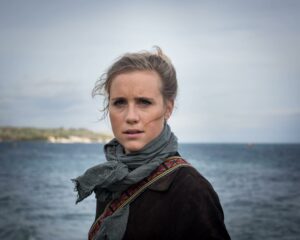

Franziska Grillmeier (Copyright: Julian Busch)

Our interview partner

Franziska Grillmeier is a freelance journalist and reporter. Her focus is on political and social issues such as health care in war and crisis situations, international law, Middle East, migration and trauma.
She lives on the island of Lesvos, in Greece.


ReportIt calls for all people to stand in solidarity with at-risk journalists and media workers by reporting all violations of media and press freedom to Mapping Media Freedom. Help us fight the normalisation of threats against journalists and stand up for media freedom by taking part here: https://www.mappingmediafreedom.org/report-it

#ReportIt: Sharing solidarity with journalists facing sexist online harassment

By | Features, Germany, Mapping Media Freedom, media freedom featured, North Macedonia, ReportIt, United Kingdom


Image of sexist online harassment by IT4Change CC4.0

Journalists Tanja Milevska, Anastasia Tikhomirova and Marianna Spring work in different countries for different media but have one thing in common: all  have become targets for misogynist online harassment.

For Tanja Milevska, nasty comments are  nothing new. A freelance journalist, she works for the MIA news agency in Brussels where she covers political themes. One of them is the public responses to the new name and status of her native North Macedonia. When she wrote that Hungary’s Prime Minister Viktor Orbán had used the old name (Macedonia), trolls began to threaten her in social media posts.

The European Commission issued a statement condemning the threats: “A free press is the cornerstone of democracy and in Europe’s DNA. Democracy cannot work without free and independent media and respect for freedom of expression is essential.”

Tanja Milevska. Photo: private

The harassment  reached another crescendo six months later, after Milevska wrote about the predominantly masculine culture of video gaming. One troll even offered a bounty of 1,000 euros for anyone who could hack into her Twitter account. She has developed a strategy for coping with the continuing abuse: “I don’t read my Twitter feed these days. My partner looks at it first, to filter out the hate“

Anastasia Tikhomirova’s Instagram photo

In Germany, the Volksverpetzer blog which reports on right-wing extremism is a frequent target for online abuse. One of their regular contributors is 21-year-old Anastasia Tikhomirova. She also works for taz, a left-wing national daily newspaper. Tikhomirova noticed that online harassers  frequently accused her colleagues of “spreading leftist propaganda” but that their posts about her did not refer to what she’d written – only to how she looks. At one point she was physically threatened, too, during an anti-lockdown protest in Leipzig. Police escorted her to safety after she tweeted for help.


“Harassment should not be normalised”

Online on YouTube, Instagram and on a Facebook page with more than 25,000 followers, the harassment  continued. Anastasia asked the platforms  to remove the posts but they refused, maintaining  that their community standards had not been breached. In the comments section of a derogatory Facebook post about her, she asked for support and received over 100 supportive messages – all of which were deleted by the page administrators. Still, the trolls could not remove the more than 200 private messages expressing care and concern for her safety and wellbeing.

“My advice is: never do what your haters tell you to do. Don’t shut up. Don’t turn off social media. There are people who will stand with you in solidarity – even if they don’t know you. We shouldn’t stop talking about sexist hate speech,” says Tikhomirova.

Just as in the case of Volksverpetzer, debunking and denouncing fake news triggers rage from those who are spreading it. So for a special correspondent like BBC Disinformation Correspondent Marianna Spring, whose role is to fact-check and defend  the truth, every working day has its hazards. She decided to hit back at the harassers  by ranking their tweets, with the worst insults (claiming she was a child sex abuser) scoring highest in the “hate parade”. It’s a measure of Marianna’s strength and resilience that she can use her sense of humour in this way to ridicule her would-be tormentors. BBC colleagues and other supporters responded with positive messages of empathy.

Marianna Spring. Photo: Twitter

“I am subject to a unique type of abuse. I am frequently called “Satan’s whore”, “the Devil’s slut” and other misogynistic terms for exposing the disinformation ecosystem that has been linked to real-world harm.”

Marianna Spring believes the fact that she frequently appears  in vision on the BBC’s many channels on TV, radio and online contributes to  the situation. She notes that “clips that show my face often solicit the most sexist harassment”. She concurs with the usual advice, which is “not to feed the trolls”, and stresses that she tries never to fuel the conflict, but rather to close it down. It’s important for her that everyone knows this abuse is happening.

“I think relentless online abuse directed at reporters and journalists should not be normalised. It’s for that reason I choose to highlight it. I am far from alone in receiving abuse. My colleagues are subject to horrific racist, homophobic, and sexist abuse – other journalists around the world are persecuted just for doing their jobs.”

If you are also facing misogynist harassment and attacks, you can #ReportIt here. It’s quick and easy and always confidential.

Correction: the originally-published version of this post wrongly stated that Anastasia Tikhomirova is the only member of the Volksverpetzer team who identifies as a woman. This has been removed from this updated version.

#ReportIt: “I had never felt so threatened while doing my work” – reporting on climate protests in Germany

By | Features, Germany, ReportIt

By Katharina Schipkowski

In the early morning before sunrise, about two hundred people arrived in a local train at a very small railway station in Rhineland, near Europe’s biggest coalmine, Garzweiler. It was dark and raining and the people started moving quickly in a single line towards the fields, because they hoped to make progress  before the police turned up.

Ende Gelände is a well-organised protest event organised by climate activists against coal. Since 2015, the activists have brought thousands of young people to Germany’s coal producing area in North Rhine-Westphalia to occupy and obstruct the coal-infrastructure for one weekend.

For the police it is a largescale and resource-heavy operation. However, as it happens every year they should know what to expect and have the opportunity to learn from previous years’ experiences. Irrespective of that, they  bring thousands of officers to the field in response to the protest. That morning, the activists managed to arrive at the mine  – the police officers arrived too late and there were too few of them to prevent the protesters from gaining access.  However, with batons and fists they forcibly stopped some activists who where about to break through a police line.

Private property or situation of public interest?

For journalists this is a critical moment – do you follow them into the mine or not? The mines and power plants are private property, owned by the large German coal producer, RWE. Being a journalist doesn’t automatically allow you to enter unless there is a situation of public interest that requires media coverage. As a journalist you have to weigh up the arguments in that split second – private property versus public interest – and if you decide that public interest  trumps the other, you follow the protesters and go down. Of course, RWE workers and even the police officers can come to a different conclusion by weighing up the options and arguments differently. This then opens up the possibility of being forcibly arrested, detained or charged, alongside the protesters you are covering. If RWE does take you to court, a judge must decide if your decision was justified. Here is yet another person weighing up the decision you made, trying to walk in your shoes, with no guarantee they would make the same decision you did. RWE is still pursuing a lawsuit against a German photojournalist who was reporting on the blockade of a power plant during climate protests in 2017. RWE wants 2.1 million euros compensation from him and five activists.

But the law is not the only thing you have to think about in that moment. The other consideration is the violence deployed by the private security workers employed by companies such as RWE. When I arrived at the site of the coalmine just behind the activists, I saw about ten white RWE security vehicles arrive. The security guards jumped out of the cars, ran towards the activists and journalists and started to beat them and pull them down to the ground. One of them tried to beat the camera out of a colleague’s hand and push him down. Another came towards me, pushing me back trying to force me to stop filming. He also tried to take my phone away from me. I had never felt so threatened while doing my work before. I even called out to a nearby police officer  asking him to do his job and protect us from the violent security guards.

I had never felt so threatened while doing my work before.

This is just a snapshot of how threatening the situation was. As a reporter covering mass civil disobedience or secretly-planned protest actions, it is clear to me that the police do not really value press freedom. In fact it is the opposite: as a reporter you have to go out of your way to convince the police officers  that you are not an activist. If you fail to do this you are at risk of physical violence. The violence is not always intended, even if the injury is severe:  during the Ende Gelände action a journalist was taken to hospital because she was in the way when a police horse shied. She suffered two broken ribs.

In the Dannenröder Forest, press freedom is not a matter of course

In the Dannenröder Forest, the point of action of the German climate justice movement right now, press freedom is not a matter of course. Activists have been occupying trees  for more than a year to preserve the forest and prevent the construction of a highway, which would destroy parts of the ancient and ecologically-valuable mixed deciduous and coniferous forest. On 1 October, police officers and tree fellers started to forcibly evacuate the protesters and destroy the tree houses where they had been living. In the beginning it was very difficult for journalists to report from there because the police wouldn’t let them enter the eviction zones, calling it  a danger zone. They blocked the entire area with warning tape and only let photographers and reporters enter one small area, many meters away from the occupied trees. After a public outcry and complaints from journalists this policy has changed; now the blocked area has been reduced in size, enabling photographers to at least be able to see what they are shooting.

Still the situation remains  dangerous for reporters. Recently a colleague reported from Dannenröder Forest that a riot police unit intentionally attacked journalists when they were reporting on confrontations between activists and journalists.

Even if you are lucky enough to never have been directly affected by police violence against journalists, you know the stories of colleagues and behave differently compared to a place where press freedom was not just a law but reality, everywhere, at any time.


About the author

Katharina Schipkowski works as a journalist and editor in the daily newspaper taz.die tageszeitung. She lives in Hamburg but likes to travel to other places to report about social movements and climate justice.


ReportIt calls for all people to stand in solidarity with at-risk journalists and media workers by reporting all violations of media and press freedom to Mapping Media Freedom. Help us fight the normalisation of threats against journalists and stand up for media freedom by taking part here: https://www.mappingmediafreedom.org/report-it

#ReportIt: Is Italy more interested in keeping secret pacts with criminals, rather than protecting journalists?

By | Italy, Malta, ReportIt

[Leggi la versione italiana qui sotto.]


By Nello Scavo

The worst enemy of journalists and journalism is not crime, but the state lie. A state that lies when faced with journalists’ investigations is a state that legitimises those who threaten and intimidate journalists. A state that favours and stimulates acts that discredit and marginalise journalists sets the foundations for the legitimising of  acts that threaten and silence  journalists everywhere.

A year ago in my newspaper, we published evidence of “secret negotiations” between Italian national institutions and Libyan militias involved in the trafficking of people, oil and drugs. Since that day, we have not received any co-operation from government officials who have preferred to remain silent or lie.

There was a series series of lies, omissions, deception – even silence

Most of the clarifications are still missing. The only certainty that is known is that the commander al-Milad – known by the alias ‘Bija’ – was still officially at the helm of the so-called Zawyah Coast Guard until only a few weeks ago. This was made possible by the agreements of the Tripoli-Rome-Brussels axis that did little to prevent the leaders of the Libyan mafia from capitalising on the certainty and retaining the full freedom to manoeuvre. Bija had arrived in Italy as an officer of the Zuara Department Coast Guard, but the Italian authorities were already aware of Bija’s conduct. The Italian Ministry of Defence had published a report, dated 10 May 2017, which explained that Bija had “controlled smuggling activity from West Tripoli to the Tunisian border since 2015”. However, only one day after the publication of the report, on 11 May 2017, Bija was in Italy, in Sicily, to take part in one of the meetings established after the signing of the Memorandum of Undertanding between Rome and Tripoli to combat “illegal immigration and human trafficking”, signed on 2 February 2017 and renewed on 2 February 2020.

In our reporting over the following months, we revealed their connections with the international smuggling of oil, arms and drugs, in connection with Italian mafia.

Ultimately this means that Italian political decisions had indirectly supported organised crime both in Italy and Libya.

But there are questions that the Italian government has never answered. Who were the members of the Libyan delegation that arrived in Italy in 2017? Neither Tripoli nor Rome has come forward with information regarding the composition of the delegation who travelled to Italy for a series of meetings in Italy aimed at stopping the migration flow, without obtaining in return a commitment to end the abuses in Libyan prison camps. It was only from analysing published images from the meeting, alongside the limited official information shared by anonymous sources that we could determine that at least 13 people had arrived from Libya. Documents also in our possession make it clear that they were emissaries from the Tripoli Ministry of the Interior and other departments of the government of Prime Minister al-Serraj. An official photo shows them in Rome at the command of the Italian Coast Guard. So why not disclose their names and assignments? Another question that needs to be answered is: who decided on the make-up of the delegation? Sources from the Italian government at that time (it was 2017), as well as their successors in government claimed that the Libyan delegation was invited by the International Organisation for Migration. However, the UN agency disputes this, stating that they had no role in the composition of the Libyan delegation, which was selected by unknown authorities in Tripoli and accepted by Italy.

There is also something else: who circulated the false news about Bija’s forged documents?

Anonymous Italian government sources quoted by press agencies immediately after the publication in my newspaper of the images taken in Sicily declared that Bija must have deceived the consular authorities in order to enter Italy. Instead, as was later proved, he had arrived with an authentic passport and a regular visa granted by the Italian Embassy in Tripoli. This requires an answer to another question: what was the agenda of the Libyan delegation?

Months after the journalistic revelations, the mystery remains: which ministries were visited and which officials  met with Bija, and why?

Should we give the Italian government the benefit of the doubt? In 2017, did Italian authorities know who Bija was? However, perhaps we should not be so generous as it was declared by government sources in “off the record” briefings that at the time Bija was not being pursued by the United Nations. This was contrary to the findings of a number of journalists, media outlets and reports from humanitarian organisations, Yet, only a few days before the visit to Italy, the High Studies Centre of the Italian Ministry of Defence identified Bija as one of the leading human traffickers who is also involved in the smuggling of hydrocarbons (oil).

I wanted to summarise the salient questions regarding this case because the silence that comes from unanswered questions was intended to discredit the work of journalists. But it went further; the silence was a clear message to their Libyan counterpart and everyone who was watching that secrecy was to be defended at all costs – not transparency nor openness. Every time this attitude of government institutions is repeated, journalists’ lives are in serious danger.  If it is a choice between protecting reporters and obscuring the actions carried out by the criminals, too often the State chooses the latter.

It happened to Daphne Caruana Galizia in Malta, it happened to Ján Kuciak in Slovakia and to Anna Politkovskaya in Russia. The tension between secrecy and transparency, silence and answers represents the common denominator of crimes against journalists. Without this awareness, no initiative to protect free information can be successful.

Because, after all, it is not the safety of a single journalist that is threatened, but the right of an entire community to be freely and frankly informed.


About the author

Nello Scavo has written for the newspaper Avvenire since 2001. Over the years, he has investigated organised crime and global terrorism, reporting from areas such as the former Yugoslavia, Cambodia and Southeast Asia, the countries of the former USSR, Latin America, Turkey, Syria, the Balkan route, the Horn of Africa and the Maghreb. In September 2017 he entered a Libyan migrant smugglers’ prison, describing the conditions of the trapped migrants.

Since October 2017 he has been living under police escort, due to threats from Libya and Malta in relation to mafia groups in Italy. He has won several Italian journalistic awards, including the Prize for Freedom of Information.


ReportIt calls for all people to stand in solidarity with at-risk journalists and media workers by reporting all violations of media and press freedom to Mapping Media Freedom. Help us fight the normalisation of threats against journalists and stand up for media freedom by taking part here: https://www.mappingmediafreedom.org/report-it


#ReportIt: Le autorità italiane hanno più interesse a mantenere i patti segreti con i criminali che a proteggere l’informazione?


Il peggiore nemico dei giornalisti e del giornalismo non è il crimine, ma la menzogna di Stato. Uno Stato che mente davanti alle inchieste dei giornalisti, è uno Stato che legittima chi minaccia e intimidisce i giornalisti. Uno Stato che favorisce e stimola il discredito,  l’emarginazione, fino a legittimare con i suoi complici silenzi l’eliminazione fisica dei giornalisti.

Un anno fa con il mio giornale abbiamo pubblicato le prove della “trattativa segreta” tra istituzioni nazionali ed esponenti delle milizie libiche coinvolti nel traffico di esseri umani, petrolio e droga. Da quel giorno non abbiamo ottenuto alcuna collaborazione dagli esponenti di governo che invece hanno preferito tacere o mentire.

La serie di menzogne, omissioni, depistaggi, perfino di omertà, conferma quanto sul «caso Bija» ci sia molto ancora da scoprire. La maggior parte dei chiarimenti manca ancora. Unica certezza, il comandante al-Milad, noto con il “nome de guerre” Bija, fino a poche settimane fa era ancora ufficialmente al timone della cosiddetta Guardia costiera di Zawyah, per merito degli accordi sull’asse Tripoli-Roma-Bruxelles. Negoziati che non hanno impedito ai capi della mafia libica la piena libertà di manovra. Bija era arrivato in Italia come ufficiale della Guardia costiera del dipartimenti di Zuara, ma le autorità italiane erano a conoscenza della condotta di Bija già prima delle Nazioni Unite e il Ministero della Difesa italiano aveva pubblicato un rapporto, datato 10 maggio 2017, in cui si spiegava che Bija aveva “controllato l’attività di contrabbando dall’Ovest di Tripoli al confine con la Tunisia dal 2015”. Tuttavia, solo un giorno dopo la pubblicazione del rapporto, l’11 maggio 2017, Bija si trovava proprio in Italia, in Sicilia per prendere parte ad uno degli incontri stabiliti dopo la firma la firma del Memorandum of undertanding tra Roma e Tripoli per combattere “l’immigrazione illegale e il traffico di esseri umani”, firmato il 2 febbraio 2017 e rinnovato il 2 febbraio 2020.

Nei mesi successivi abbiamo svelato le loro connessioni con il contrabbando internazionale di petrolio, armi e droga.

Ma ecco alcune domande a cui il governo italiano non ha mai risposto. Chi erano i membri della delegazione libica giunta in Italia nel 2017? Né da Tripoli né da Roma è mai stata divulgata la composizione della rappresentanza partita dal Paese nordafricano per una serie di incontri istituzionali in Italia finalizzati a bloccare il flusso migratorio, senza ottenere in cambio la fine degli abusi nei campi di prigionia in Libia. Incrociando le informazioni da fonti ufficiali, che continuano a implorare l’anonimato, e analizzando le immagini pubblicate, si è avuta la certezza che dalla Libia fossero arrivate almeno 13 persone. Documenti anche in nostro possesso chiariscono che si trattava di emissari del ministero dell’Interno di Tripoli e di altri dipartimenti del governo del premier al-Serraj. Una foto ufficiale li ritrae a Roma presso il comando della Guardia costiera italiana. Perché allora non divulgare i loro nomi e i loro incarichi? Altra domanda: da chi sono stati selezionati i componenti di quella delegazione? Fonti del governo italiano di quell’epoca (era il 2017) e altre del governo attualmente in servizio hanno sostenuto che i libici sono stati invitati dall’Organizzazione mondiale delle migrazioni (Oim). Ma dall’agenzia Onu assicurano di non aver avuto voce nella scelta dei componenti libici, individuati da Tripoli e accettati dall’Italia. C’è anche altro: chi ha fatto circolare la falsa notizia sui documenti contraffatti di Bija? Fonti anonime del governo italiano, citate da alcune agenzie di stampa, subito dopo la pubblicazione delle immagini scattate in Sicilia e pubblicate dal mio giornale hanno dichiarato che Bija avrebbe raggirato le autorità consolari. Invece, come poi è stato dimostrato, lui era arrivato con passaporto autentico e un regolare visto concesso dall’ambasciata italiana a Tripoli. Ancora:  quale è stato il programma di viaggio della delegazione libica? Anche su questo a distanza di mesi dalle rivelazioni giornalistiche il mistero permane.  Quali ministeri sono stati visitati? Quali funzionari ha incontrato Bija? A quale scopo?

Infine: l’Italia nel 2017 poteva non sapere chi fosse Bija? È stato dichiarato da fonti governative “off the records” che all’epoca Milad, accusato da inchieste giornalistiche e report di organizzazioni umanitarie, non era perseguito da provvedimenti Onu. Eppure, solo pochi giorni prima della visita in Italia, il Centro alti studi del Ministero della Difesa italiano lo indicava tra i capi del traffico di esseri umani coinvolto anche nel contrabbando di idrocarburi.

Ho voluto riassumere gli interrogativi salienti di questa vicenda perché tutti questi silenzi hanno avuto lo scopo di screditare il lavoro dei giornalisti, ma soprattutto le menzogne e le omissioni sono state un chiaro messaggio alla controparte libica. Come se le autorità italiane avessero maggiore interesse nel custodire i patti segreti con i criminali, anziché proteggere l’informazione. Ogni volta che questo atteggiamento delle istituzioni governative si rinnova, la vita dei giornalisti è messa in serio pericolo. Perché tra l’impegno dei reporter e le azioni compiute dai criminali, lo Stato dimostra di scegliere i secondi.

E’ successo a Daphne Caruana Galizia,è accaduto a Ján Kuciak come ad Anna Anna Stepanovna Politkovskaja. E’ questo il comune denominatore dei delitti contro i giornalisti. Per questo motivo sono molto grato per l’amicizia e il supporto di Ecpmf a tutti i giornalisti in pericolo.

Senza questa consapevolezza, nessuna iniziativa di protezione della libera informazione può avere successo. Perché, in fin dei conti, non è minacciata la sicurezza di un singolo giornalista, ma il diritto di una intera comunità ad essere liberamente informata.

Informazioni sull’autore

Nello Scavo scrive per il quotidiano Avvenire dal 2001. Nel corso degli anni ha pubblicato inchieste sulla criminalità organizzata e sul terrorismo globale, lavorando da aree come l’ex Jugoslavia, la Cambogia e il Sudest asiatico, i Paesi dell’ex URSS, l’America Latina, la Turchia, la Siria, la rotta dei Balcani, il Corno d’Africa e il Maghreb. Nel settembre 2017 è entrato in una delle prigioni clandestine libiche, descrivendo le condizioni dei migranti intrappolati.Dall’ottobre 2017 vive sotto scorta a causa delle minacce provenienti dalla Libia e da Malta per l’inchiesta che ha svelato la presenza del trafficante di uomini Bija ad un incontro con le autorità italiane. Ha vinto diversi premi giornalistici italiani, tra cui il Premio per la libertà di informazione.

ReportIt chiede a tutte le persone di essere solidali con i giornalisti e gli operatori dei media a rischio, denunciando tutte le violazioni dei media e della libertà di stampa a Mapping Media Freedom. Aiutaci a combattere la normalizzazione delle minacce contro i giornalisti e a difendere la libertà dei media partecipando qui: https://www.mappingmediafreedom.org/report-it

#ReportIt: We need to learn lessons from attacks at protests in Serbia

By | ReportIt, Serbia

by Zoran Kusovac

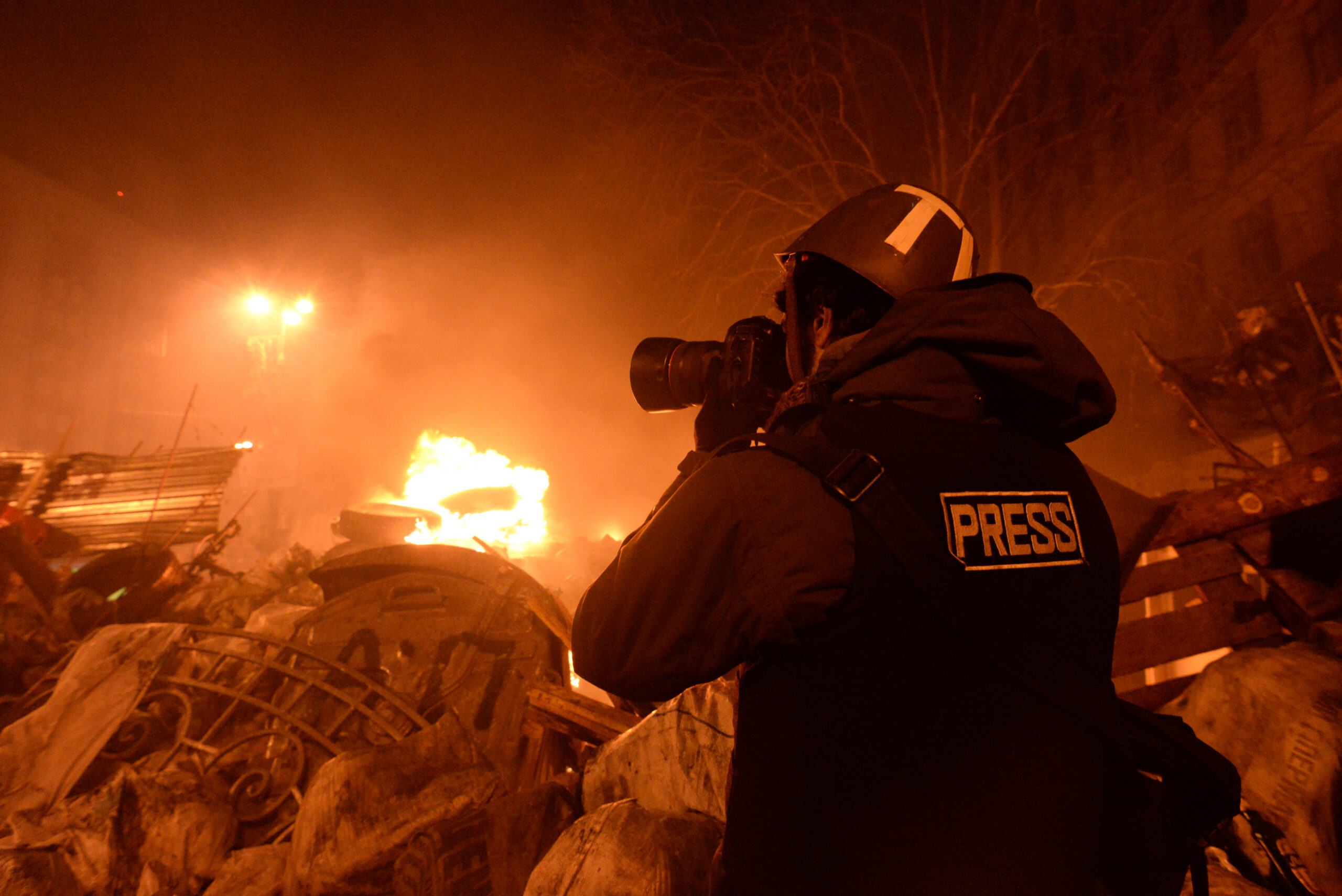
In July 2020 during public disturbances in Belgrade, some reporters were physically attacked by protestors and police, because of their perceived position, in terms of the ownership of the media outlets they work for. The executives of one organisation decided to give them physical protection. Unaware of decades of experience in using media safety consultants, they engaged a local security company that sent some tough-looking guys, big-muscled bouncers who were indistinguishable from the extremists who targeted their employees and did not know even the basics of dealing with riots and targeted mass attacks. These “protectors” were more of an invitation to violence than a deterrent. Tragedy was avoided by pure chance.

The safety of reporters in the field is one of the main concerns of responsible news editors and media executives. It is a difficult task; the very nature of the job demands that they operate in life-threatening situations. Balancing the contradictory demands of safety and coverage is even more difficult in the current technological and professional environment.


Technology adds a new paradigm of threat to media freedom

The twenty-first century brought modern digital technologies at affordable prices, opening up huge possibilities for the media. Live reporting is no longer the exclusive domain of traditional TV and radio broadcasters. The Internet and the availability of cheap multifunctional gear opened it up to all sorts of entities: newspapers, magazines, radio stations, telephone companies, social media, governments, bloggers, influencers… All of these post photographs and video that are taken by operators who have to be as close as possible to the action in order to capture fighting, shooting, explosions and beatings,  – risking life and limb. New multi-use gadgets, from ubiquitous cell phones to photo cameras that also shoot video and broadcast it live have helped to blur the distinction between “the media” and new, non-traditional content providers.

At the dawn of the era of 24-hour TV news channels, technology was expensive and very few could afford it. In 1991, at the beginning of the wars in former Yugoslavia, a set of broadcast-quality TV reporting equipment, cost at least 50,000 euros with half as much again also required for an edit suite; a satellite uplink station costing upwards of 1 million euros was needed to go live. Financial limitations effectively reduced the number of people exposed to the most acute dangers, at least in broadcast media.

This pricey gear was also complex, requiring long operator training. It comprised learning on-the-job that gave media organisations a chance to teach their staff the principles of media ethics and operational awareness in various real-life situations. But it proved not to be enough. Scores of journalists died in the line of duty in Croatia, Bosnia, Chechnya, Rwanda and other 1990s conflicts and executives and editors realised the need for specialised training and physical protection. Well-to-do media sent their frontline staff to hostile environment training courses and hired security advisers, companies that provided competent ex-soldiers and former police officers who accompanied journalists, assessed the dangers, came up with procedures to minimise risk and physically stood close to reporters in wars, revolutions and riots. It worked remarkably well, at least for a time. Until technology created a new dangerous paradigm, the one in which we now live and work.

Two decades into the 21st century, most media workers reporting on dangerous situations are again in a very precarious position.

Some of the lessons learned have been forgotten; part of the awareness, paid for in the blood of many a journalist, has been lost.

Education:  the most effective prevention against attacks to media workers

No point in pondering over why we painted ourselves into that corner. The reasons are many and include the fact that technological progress does not always translate into the well-being of the operators; the changing nature of media and media-like content providers; the failure of both industry and society as a whole to effectively raise awareness of safety issues and come up with viable tools to at least stop this dangerous decline and ultimately rectify the unacceptable situation.

The most effective affordable remedy and prevention measure is education. It should focus on two main groups:

The first is obvious: people on the ground, media workers who come into close contact with hooligans, rioters, paramilitaries, criminals, police, armies and increasingly with ordinary citizens whose grudges are vented against poor news-gatherers. Some of our colleagues are often not even recognised as members of the press; in refusing to accept their status, many wish to prevent them from carrying out their principal democratic task of informing the public of events they witness. International organisations and watchdogs need to engage with this problem,  to clarify their status. They could issue them with proof-of-status, as many are not formally employed or even accredited by the outlets who use their output. To qualify for the recognition as bona-fide members of the media and some sort of a press pass, candidates should participate in at least a basic course in journalistic ethics and a practical safety-awareness programme.

The second group is, sadly, often forgotten: owners and executives of outlets directing and using the work of those field journalists. Many of them do not have a journalistic background nor any experience in dealing with dangerous situations. I confronted a number of new media executives in several countries and all were genuinely shocked to hear details of the risks their ultimate content-producers face on the ground. Even when they wanted to act, they had no knowledge nor anyone to lean upon and sometimes made mistakes that could have put their staff at even bigger risk.

Educating these two groups, the media soldiers in the field and their colonels and generals, must be taken as an urgent task for all organisations that can in any way contribute, from financing to organising and facilitating. COVID-19 has taught us that achieving that goal does not require huge and expensive infrastructure: it can be done online, in interactive workshops. But it must be done decisively and without delay.


ReportIt calls for all people to stand in solidarity with at-risk journalists and media workers by reporting all violations of media and press freedom to Mapping Media Freedom. Help us fight the normalisation of threats against journalists and stand up for media freedom by taking part here: https://www.mappingmediafreedom.org/report-it


Photo: Jerome Delay

About the Author

 Zoran Kusovac is a journalist, editor and media executive with 30 years’ experience in the media. He has worked as a junior reporter, a producer, bureau chief and creator and director of the first fully digital TV station in South-Eastern Europe. He worked for Sky News,Fox News, Jane’s Information Group, The Times (London) and others, mainly in the Balkans, Eastern Europe, Middle East and South-East Asia. In his own words his most noteworthy professional achievement is that in over 20 years of leading and directing journalists in wars, rebellions, civil unrests and many violent events, his teams did not suffer any serious casualties, but achieved remarkable coverage. Admittedly, luck also played an important part.


Photo: by Global Panorama // flickr.com // CC BY-SA 3.0