All Posts By

Mapping Media Freedom

Interview: UNESCO names and shames governments that provide impunity for those who kill and threaten journalists

By | Mapping Media Freedom, Media Freedom

Across the world, and increasingly in Europe, journalists are under threat and those who murder or threaten them are getting away with it. On this 2019 International Day to End Impunity for Crimes against Journalists, ECPMF seeks to understand what is being done to better protect them.
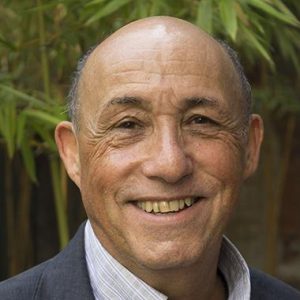
UNESCO names and shames governments that provide impunity for those who kill and threaten journalists Professor Ivor Gaber, UK representative on UNESCO committee. Photo: ECPMF

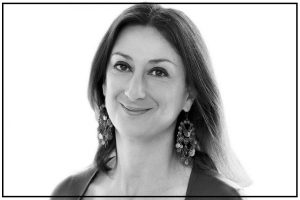
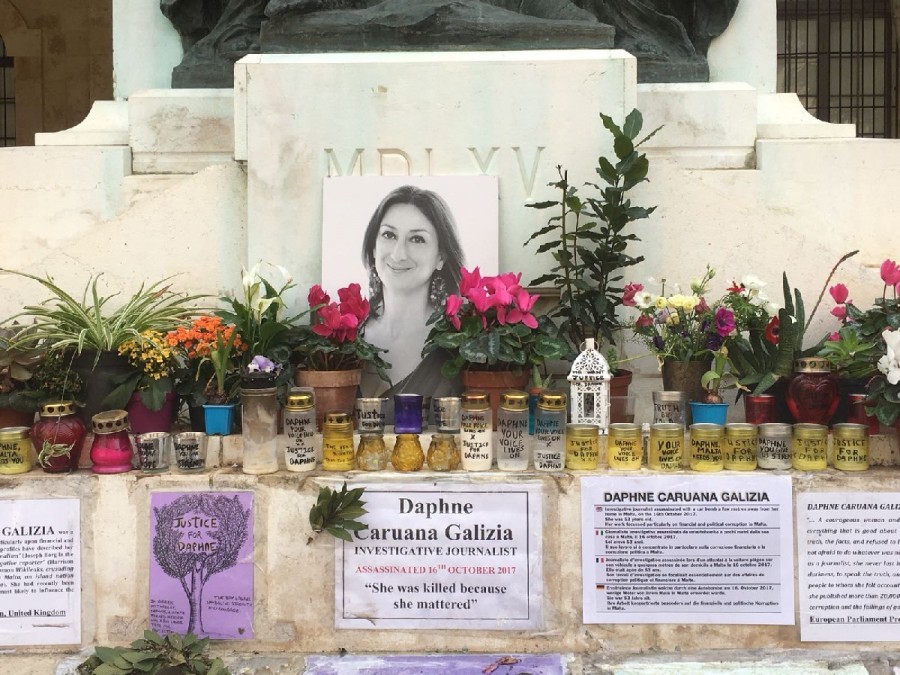
The Council of Europe lists 22 cases of impunity for the murder of journalists, with 14 in Serbia and Albania alone. The latest name to be added to this list of shame is that of Daphne Caruana Galizia.

UNESCO as the United Nations body responsible for the safety of journalists, through its Communications Committee, is trying to break this vicious spiral.

Ivor Gaber is Professor of Political Journalism at the University of Sussex and the UK government representative on this UNESCO Committee. In an interview with the European Centre for Press and Media Freedom (ECPMF), he explained how it operates…

Ivor Gaber: Unlike the UN Security Council, the Committee doesn’t have the power to do much apart from condemn governments. It’s soft power if you like and the power to name and shame is as good as it gets. For a long time it’s been training journalists in journalism safety. Local NGOs, mainly in the South, apply to UNESCO for funding to get an international expert to train them. In many countries, political demonstrations are dangerous places for journalists to go. You need to know how to protect yourself. There are very simple measures, but things that people don’t always think about – like keeping your phone always charged, making sure you have a spare battery, telling people where you’re going and when to expect you back, checking your driver knows where to go, ensuring that you know the lie of the land and escape routes. These sound obvious, but often it’s the obvious which would have saved journalists’ lives.

ECPMF: They may not be obvious to freelancers or newly-qualified journalists who are just entering the profession. Do you make any special provision for them?

A: You raise an important point, because significant numbers of journalists who are murdered are freelancers or bloggers, not protected by employers who mostly – all credit to them – go to great lengths to ensure the safety of their correspondents.

Q: In EU members states now journalists are being murdered: UK, Malta, Slovakia. But UNESCO seems to focus mainly on the global South…

A: Certainly in terms of raising awareness and embarrassing governments, that is something that’s happening. When UNESCO publishes its biennial report on the safety of journalists, it does not discriminate between North and South. If journalists are being killed in Russia, as they are, that will feature highly. At this stage, the killing in Malta is a one-off, so you see Malta fairly low down in the league table. The issue of impunity is at the heart of this, because many of these journalists’ deaths would not happen if the perpetrators did not know that they were going to be protected. As global consciousness about the problem of impunity is raised, governments will feel obliged to do something. For example, recently in Russia, the government DID rush to condemn the killing of a journalist. It was a better reaction than when Anna Politkovskaya was murdered.

Q: Do the biennial reviews place any obligation on the governments to respond or take action?

A: UNESCO member states can resent an international body telling them what to do. Nonetheless, naming and shaming has proved effective and we do publish a list, not just of those countries that have responded but also of those countries that haven’t responded, and there has been a notable increase in responses. It’s sad that journalists around the world don’t report this UNESCO initiative with anything like the prominence it deserves. It should be a headline story. Unless there’s a sensational killing – as in the case in Malta – journalism safety doesn’t actually grab the headlines. It’s sad, it’s a pity.

Q: The climate of fear under which many journalists work contributes to that – the attacks and insults from politicians for example. Is there a way that UNESCO could use soft power to influence the language used by politicians and their attitude towards the media?

A: The Committee does hold conferences that ambassadors and high-level representatives attend. It’s part of a global effort to address this issue. However, at the moment, I’m not sure we’re going forwards. We keep working on it, just as your organisation does.

Q: What are your hopes and fears for the safety of journalists?

A: The Committee has had to shift its attention to the killing of journalists. At the moment all we’re trying to do is to stop the killings from happening as opposed to improving the quality of journalism or the diversity. These are the issues we ought to focus on. But because of the growing problem of the deaths of journalists, the Committee’s been distracted.

By Jane Whyatt

Daphne Caruana Galizia: Why there are concerns over the public inquiry into her assassination

By | Malta, Mapping Media Freedom, Media Freedom

86 days. It took the Maltese government 86 days to set up a public inquiry into the assassination of Daphne Caruana Galizia. The news came in on Friday, 20. September, late in the evening. Although this is a step in the right direction to finally bringing justice to the murdered journalist, the impartiality of the inquiry’s board is concerning.
Concerns over public inquiry into Daphne Caruana Galizia’s assassination
On 26. June 2019, the Parliamentary Assembly of the Council of Europe (PACE) voted to adopt the report on Malta prepared by Special Rapporteur of the parliamentary assembly of the Council of Europe on the assassination of the Maltese journalist Daphne Caruana Galizia, Peter Omtzigt, which demanded an independent public inquiry into the murder of Daphne, be set up. Omtzigt’s report underlined failings in the rule of law and raised concerns over the impartiality of the investigations.

Only six days before the deadline on 26. September 2019, the Maltese government announced that a public inquiry has been set, presided by Judge Emeritus Michael Mallia. The family of Daphne Caruana Galizia published a press release, raising concerns over the members that were appointed to board the public inquiry. The family is demanding an impartial inquiry free from any government interference.

In an interview with the European Centre for Press and Media Freedom, Matthew Caruana Galizia, Daphne’s son, said that the make-up of the board is economically and politically dependant on the government. The chair of the board is involved in murdered journalist’s trial, one of the members is currently a lawyer of the organised criminal network that his mother was investigating, and the other’s appointment in any positon is directly dependant on the prime minister, putting him in a position that cannot contract the status quo. Matthew emphasised that the inquiry, is not only to find out whether his mother’s murder could have been prevented but also, “It’s also a way of breaking the system of corruption that has existed for many years in Malta. It is really Malta’s truth and justice commission, and members of the inquiry cannot be a part of the same corrupt system that the inquiry is supposed to be breaking.”

The family demanded a meeting with Prime Minister Joseph Muscat, in order to discuss these concerns. Muscat’s office agreed to a meeting. So far, it has been confirmed that this meeting is going to take place on 30. September.

In a statement, OSCE Representative on Freedom of the Media, Harlem Désir, demanded that the inquiry must be fully independent and yield justice.

Omtzigt welcomed the public inquiry, but at the same time stressed that the inquiry needs to be “fully independent and its members impartial beyond question”.

“This is in a sense about justice for our country, not only justice for our mother. It’s about our country figuring out what’s wrong with it doing something about that – doing something to prevent future murders”, said Matthew Caruana Galizia.

By Renata Rat

Sasha Popovic - flickr - CC BY-NC-ND 2.0

Interview: Spain has experienced an unprecedented decline in press freedom, says PDLI

By | Mapping Media Freedom, Media Freedom, Spain

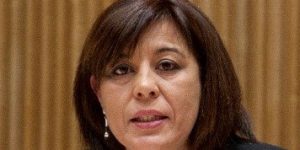
Yolanda Qintada. Photo: License CC_BY_SA – Author: Dani Gago

by Jane Whyatt and Frederic Krull

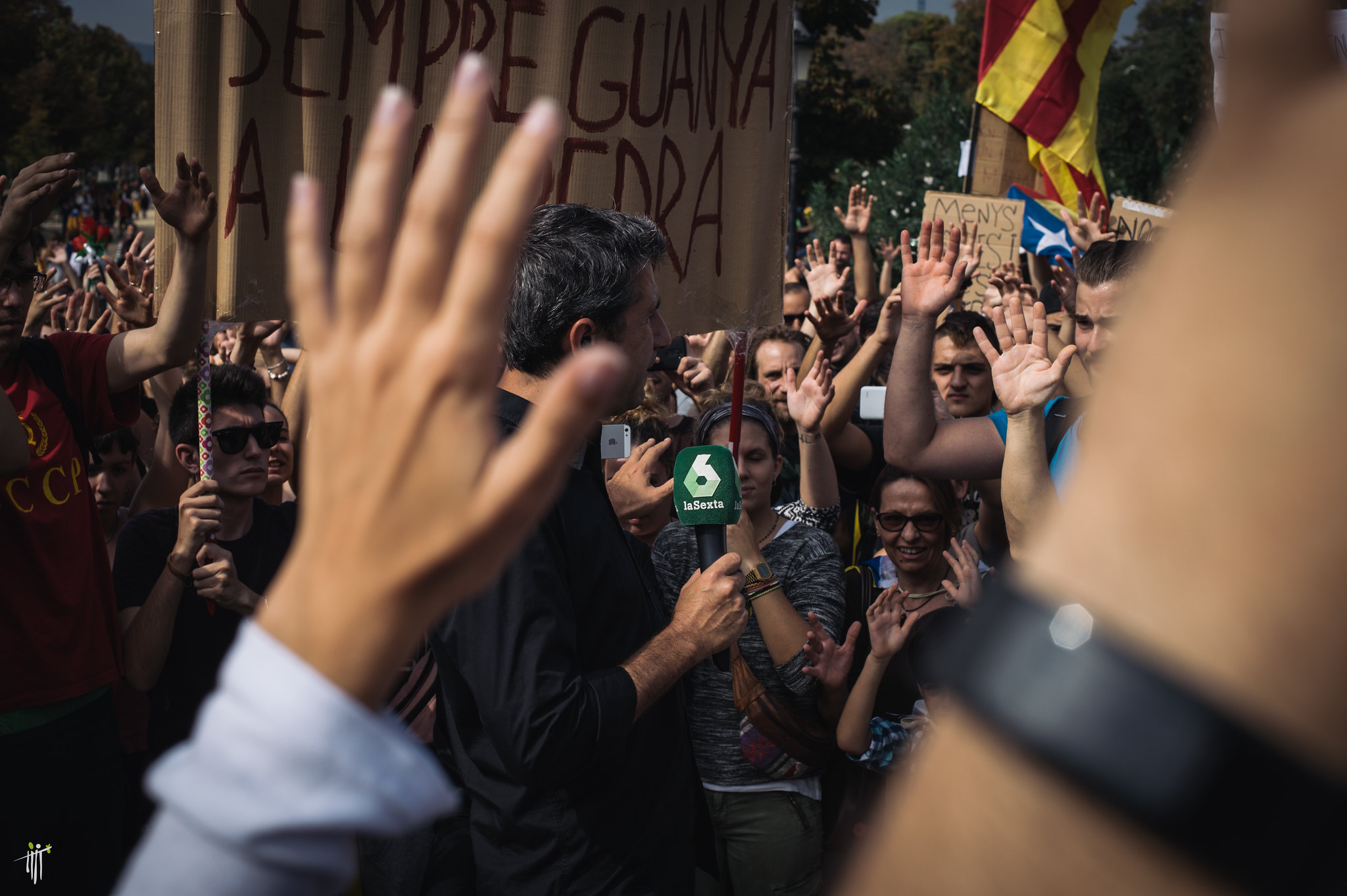
Hooded demonstrators have attacked TV journalists covering the Catalonia national day demonstrations which attracted more than 500,000 people in support of independence for the autonomous region.

The Spanish journalists’ unions Agrupación de Periodistas de CCOO (FSC-CCOO) and Federación de Sindicatos de Periodistas (FeSP) condemned these acts. Their statement rejects “ All types of behaviours that seek to coerce, harass, intimidate and condition the work of journalists, violating the fundamental right to freedom of expression and the right of citizens to receive free and truthful information.“ Catalonia is not the only flashpoint. Spain’s current political stalemate is matched by paralysis in the state of press freedom. There is a Gag Law, criminal defamation, lack of access to information, as well as online harassment of reporters and little protection for whistleblowers.  These aspects are all causing problems.As noted in the European Centre for Press and Media Freedom’s (ECPMF) submission to the United Nations Human Rights Periodic Review on Spain, this situation creates a chilling effect.

ECPMF’s partner organisation in Madrid, Plateforma en Defensa de Libertad de Información (PDLI), is concerned. In a frank interview with ECPMF, the PDLI Co-ordinator Yolanda Quintada (pictured) admits that conditions for press freedom have not improved in recent years – in fact she believes they have never been worse.ECPMF: Spain has some restrictive laws that affect journalists’ ability to operate freely. What are they and how do they work?

YQ: From the legislative point of view, the main problems in Spain are:-The extensive and excessive use of provisions contained Organic Law 4/2015  has a negative impact on journalists’ reporting activities.The Organic Law pensalises the unauthorised use of images and other data related to members of security forces, as well as disrespect  towards them. This law is known as the ’Gag Law’.Then there is the problem that defamation is a crime, rather than a civil matter, as recommended by international organisations. In addition to that, there is no legal  protection for all those who carry out journalistic activities, whether as a paid professional activity or in any other way, nor for sources and whistleblowers. Neither is there a legal recognition of the right to access information and community media are not legal in Spain. Plus, there is a lack of regulation on transparency of advertising campaigns paid for with public funds.

ECPMF: So there are repressive laws. What about how the media system operates in practice?

YQ: Most of the media are controlled by just a few transmedia wners. The economic crisis has increased the dependence of the big media on their advertisers and their vulnerability to political pressure. According to surveys in the sector, the majority of journalists admit to experiencing political pressures that affect their work. It has also made the employment situation of journalists much more precarious. There have been layoffs and salary cuts and there is reduced staffing in newsrooms.The public media are not guaranteed independenceIn addition, advertising campaigns paid for with public funds are another indirect form of control. The public media are not guaranteed independence from political power. Except in certain regions, there is no independent state agency that regulates the audiovisual sector. Online, the growth of independent digital media and the dissemination of information and opinion through alternative online channels (social networks) brings new restrictions to regulate the Internet (copyright, and threats to regulate anonymity on the Internet, the ‘Right to Honour’, or the ‘fake news’ …) and these also pose potential risks for freedom of information.

ECPMF: It’s said that the law on insults against, the royal family, certain people or even religious feelings can result in self censorship or just plain censorship of journalists.

YQ: Yes, from the PDLI we have been registering and denouncing all these cases for their undoubted chilling effect. On our website you can study all these cases and our positions, against magazines and satirical media, etc. In Spain there is a double problem in this regard: on the one hand, as we have been denouncing since the PDLI was founded, the Spanish Criminal Code goes against international standards, considering crimes such as the ‘offence to religious feelings’ or ‘insults to The Royal Family’. On the other hand, any of these complaints (which are presented in the courts with a clear threatening purpose), are admitted by the judges and the accusation is supported, sustained and maintained by the Prosecutor’s Office.More info on this can be found here (in Spanish).

ECPMF: What role do defamation cases against journalists play in this? For example the one of Raquel Ejerique or others?

YQ: Defamation lawsuits against media and journalists (especially those who have revealed cases of corruption) are a veiled threat to prevent this information from coming to light, in our opinion.Relevant, truthful, public interest informationWe have rejected these pressures, remembering that the function of media and journalists is to release relevant, truthful and public interest information. In all these cases, the criteria of opportunity and journalistic interest have determined the publication of the information and we have remembered that these considerations prevail over any other in the exercise of journalism. In addition, in some of these cases, in which the origin of the information was a journalistic leak, the PDLI has denounced the lawsuit as a means to ccess the source of the published information, and we recalled that the protection of their sources is one of the professional duties of journalists. For that reason, we consider the lawsuit against Raquel Ejerique and eldiario.es, (media founding partner of the PDLI)  a serious interference in the constitutional right to inform and be informed, and an unacceptable threat against the journalism of investigation.More info on this can be found here (in Spanish).

ECPMF: How does the law deal with topics like terrorism and hate speech?

 YQ: Partly thanks to the constant public denunciations by the PDLI, there is clear social alarm, and public concern, about the deterioration of freedom of expression and freedom of the press. The society is clear: issues such as terrorism and hate speech are excuses, on many occasions, that are used to limit these freedoms.ECPMF: And how does it affect journalism and the freedom of expression? Or is it just a judicial problem?

YQ: Unfortunately, it is not just a judicial problem. Spain has experienced an unprecedented decline in freedom of expression in recent years, whose consequences have gone far beyond the courts.

This interview was conducted by Frederic Krull.

Turkey: Another crackdown society, another crackdown on journalism

By | Mapping Media Freedom, Media Freedom, Turkey

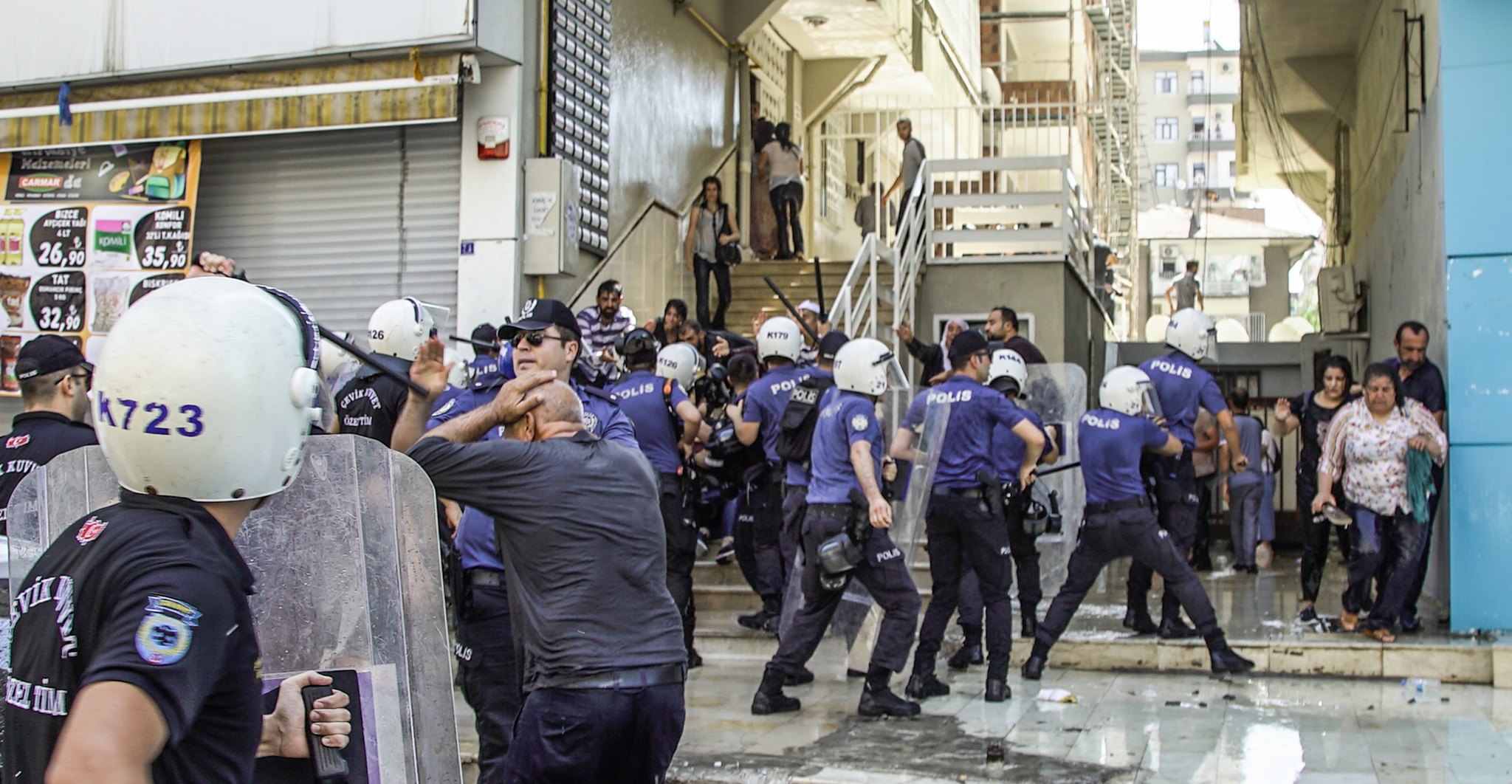
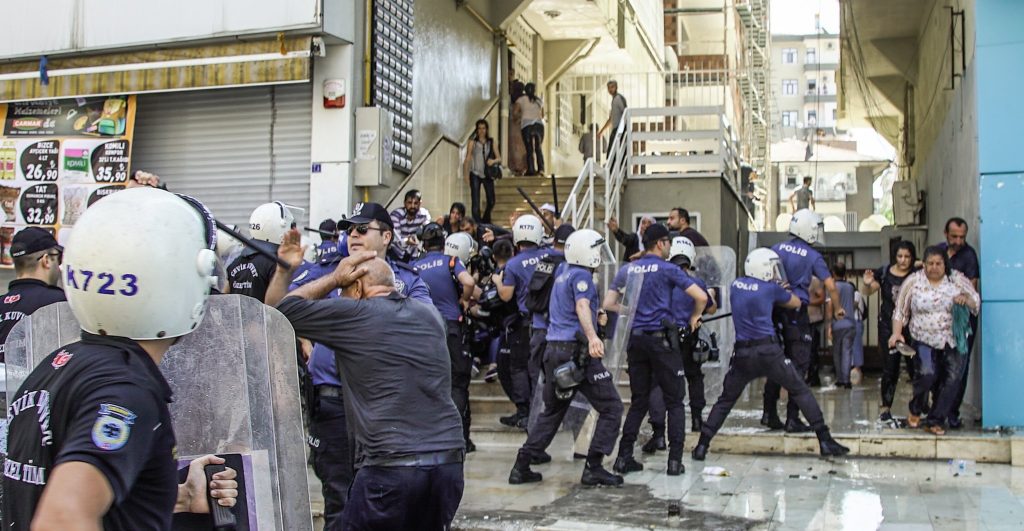
Since 18 August, people in Turkey took to the streets to protest against the governments decision to dismiss three pro-kurdish Metropolitan Mayors in Diyarbakir, Mardin and Van in the southeast of the country. The situation escalated when the police started to attack the peaceful protesters. In course of the events, 6 journalists have been arrested and others were assaulted by the police, as they were covering the public demonstrations in Mardin, Diyarbakir and Istanbul.

According to Expression Interrupted, “Mezopotamya news agency (MA) reporters Ahmet Kanbal and Mehmet Şah Oruç, Jinnews reporter Rojda Aydın and journalists Nurcan Yalçın and Halime Parlak were arrested in Mardin while reporter Yelda Özbek was arrested in Diyarbakır.”

In Diyarbakir reporters and photographers have reportedly been attacked by the police and had their equipment damaged, while covering the violent intervention of the state forces.

Police and Protestors in Diyarbakır. Picture taken by Murat Bay.

MP’s and members of the Human Rights Association also came together to demonstrate infront of the Çağlayan Courthouse in Istanbul. According to Bianet, the group that also included the journalist and author Ahmet Şık, has been dispersed and prevented from holding their speech by the police. Video footage of the attack on Ahmet Şık has been published on twitter.

Disproportion of governmental forces continues to be the solution of the turkish state to silence unwelcome voices.

Bulgarian investigative news outlet ‘Bivol’ again targeted by government investigations

By | Bulgaria, Mapping Media Freedom

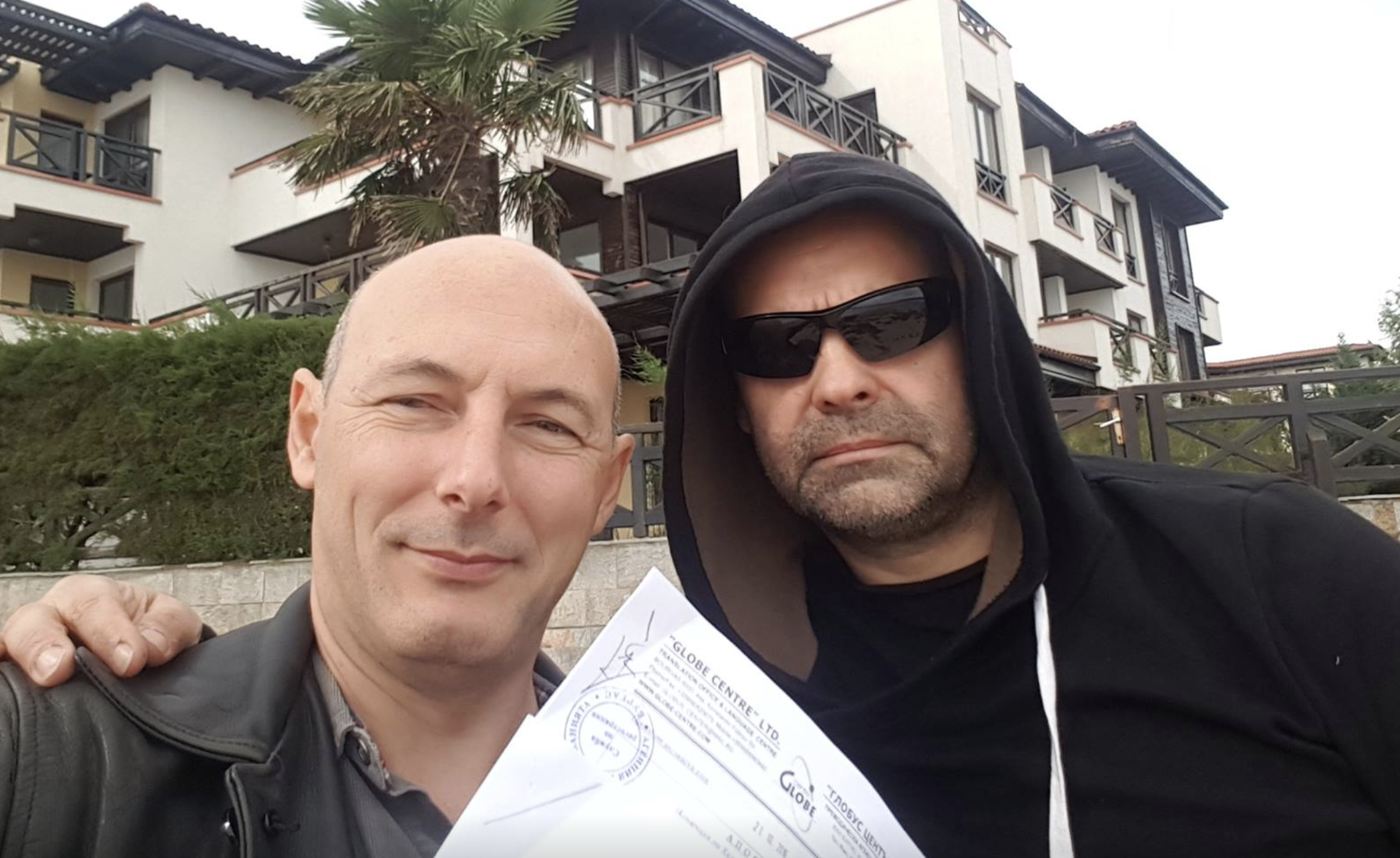
On 2. August 2019, the Bulgarian investigative news outlet and IJ4EU grantee ‘Bivol’ again became the target of a government investigation. As part of an inquiry into the largest data breach in the Bulgarian history this year in July, the government filed an European Investigation Order (EIO) in France, where Bivol’s editor in chief Atanas Tchobanov resides. The circumstances of the hacking attack still remain uncertain until today.

The prosecutor Evghenia Stankova is trying to link Bivol with the current main suspect Kristian Boykov who works for the TAD Group, a US cyber security company and released images as alleged evidence of the connection.

Tchobanov himself has denied all kinds of links to the suspect and the hacking attack itself. In the aftermath of the so called “ApartmentGate” series, in which Bivol revealed corruption involving the highest Bulgarian offices, they have been the target of defamation and criminal investigations. The real estate affair included Bulgaria’s Prosecutor-General Sotir Tzatsarov as a leading figure of alleged corruption. Bivol’s investigations have also done some severe damage to the reputation of the ruling GERB party, and lead to the resignation of important party figures such as Tsvetan Tsvetanov, the former chair of GERB’s parliamentary group.

The latest government move against Bivol is another sign of attempts to silence the investigative news outlet.

„The pattern of intimidation tactics is the same, and we experience a similar smear campaign and shitstorm attack after each big investigation,“ Tchobanov told OCCRP. He suspects that the whole investigation against the TAD Group will be mis-used in order to gain access to Bivol’s computers and servers.

Three critical reports conclude Poland’s public broadcaster is biased

By | Mapping Media Freedom, Poland
This article first appeared on the website of the Kharkiv Human Rights Protection Group and is reproduced here with kind permission of the Group. By Halya Coynash, the views expressed are the author’s own.


Poland may be in the European Union, but its public television broadcaster, TVP, is using techniques we are more accustomed to seeing on Kremlin-funded Russian television. The right-wing ‘Law and Justice’ [Prawo I Sprawiedliwość, or PiS] party effectively took over TVP and public radio shortly after winning the 2015 parliamentary and presidential elections.

The members of the National Council of Radio Broadcasting and Television [KRRiT], which is supposed to oversee TVP’s compliance with the requirements for a public broadcaster were all chosen by PiS. What is more, the head of KRRiT is, in breach of Poland’s Constitution, a PiS politician. If the elections in 2015 were won fairly, there must be very serious doubts about the coming parliamentary elections, if only because the public broadcaster is so clearly serving the ruling party. A new parliament must be elected by November 2019. The stakes are extremely high as the PiS government has already spoken of plans to bring all media under Polish ownership. This is almost certainly aimed at destroying certain independent media.

The following report summarises the most alarming details of three reports about TVP. The last specifically concentrates on the reporting of the European Parliament elections, but all draw the same conclusions about the methods TVP is using to achieve aims that are totally inappropriate for a public broadcaster. There seems an evident and urgent need for reaction from the European Commission to a situation where the public broadcaster is serving a particular party, with this having serious implications for Polish citizens’ right to free and fair elections

Monitoring of the European Elections
by the Society of Journalists (Towarzystwo Dziennikarskie) in co-operation with the Stefan Batory Foundation 

This is the most recent of the three reports, and covers the period from 10-24 May 2019, i.e. up to the European parliamentary elections. It was aimed at finding out how TVP fulfils (or flouts) its obligation, as per Article 21.1 of the Law on Radio and Television, to ensure “pluralism, objectivity, balance and independence” in its broadcasting. The study concentrated on the main evening news program ‘Wiadomości’.

During the monitoring period, two thirds of the material on Wiadomości (105 out of 153) pertained to the European elections, in which the main rival for PiS was Koalicja Europeiska [hereafter, the Coalition].

69 of the news items were to do with PiS, with 68 of these positive, and one neutral;

33 news items concerned the Coalition, with all of them negative;

There were also two negative reports on ‘Konfederacja’, a far-right party which was probably competing for part of PiS’s electorate.  There was nothing at all about the other parties, although Wiosna and Kukiz15 are not small.

The same situation was seen with the announcements at the beginning of news broadcasts of what was to be in the programme. Of the 30 that concerned the elections, 20 were about PiS and positive; 9 were about the Coalition, with negative overtones.

There was a disproportionate amount of coverage, including direct interviews, given to the leader of PiS, Jarosław Kaczyński, with the next two being Beata Szydło, the former Prime Minister who topped the PiS list for MEPs, and Zbigniew Ziobro, who is both Justice Minister and Prosecutor-General.  Of the ‘top ten’ figures appearing on TVP, only three were not from PiS, including the leader of the Coalition, Grzegorz Schetyna and Donald Tusk, President of the Council of Europe (and former Polish Prime Minister) PiS has consistently demonised Tusk.

The monitors found that news items which were positive about PiS or negative about the opposition would be grouped together, with at least two, but often three or more items together. There were, for example, blocs of four negative news items concerning the Coalition on May 15, 17, 23 and 24, and of 6 in a row, all positive in favour of PiS on 22 May.

The cumulative effect becomes especially pronounced in the last three broadcasting days before the elections, On 22 and 23 May, blocs of several positive reports favouring PiS were followed by blocs of negatively presented news about the opposition.  On 24 May, the only difference was that the program ended with two PiS-positive items (with a neutral item in between).

During the years of the Viktor Yanukovych regime in Ukraine, monitoring needed to include not only obvious bias, but also the muffling of inconvenient information and manipulative presentation of various events.  The same is, sadly, true of Poland’s TVP under the current government.

Several scandals, including one that showed Jarosław Kaczyński in a very bad light were effectively muffled altogether.  One scandal, involving Prime Minister Mateusz Morawiecki’s highly suspect purchase of Church land and the broader issue of how his seemingly substantial wealth does not appear on his income declarations, did get a formal mention.  In fact, however, the audience saw the headline “Gazeta Wyborcza’s political attack”, but was not given the chance to learn that this was no attack, but good work by investigative journalists exposing dealings that at the very least are morally suspect.

There was also no mention of a devastating film about paedophilia within the Polish Catholic Church, although the film had been viewed on YouTube by 20 million people and was undoubtedly in the public interest. Instead, TVP produced a Justice Ministry table of the jobs where convicted paedophiles are employed, with no mention of priests at all.

This is especially disturbing since the Justice Minister (Prosecutor General) used the opportunity to push through draconian and very ill-advised changes to Poland’s Criminal Code.

Some of the items reported are more reminiscent of Russian propaganda channels during the first months of Russia’s undeclared war against Ukraine, including fake news and people who are not who they say they are. On 24 May, for example, TVP interviewed a supposed ‘Belgian journalist’, who claimed that Donald Tusk “despises Poland and Poles, and is damaging Poland”.  This supposed ‘Belgian journalist’ was speaking French so most viewers would not have recognised the deceit.  The man was, in fact, Sebastien Meuwissen, a former intern for TVP2, probably living in Warsaw, and certainly able to speak to the correspondent directly in Polish.

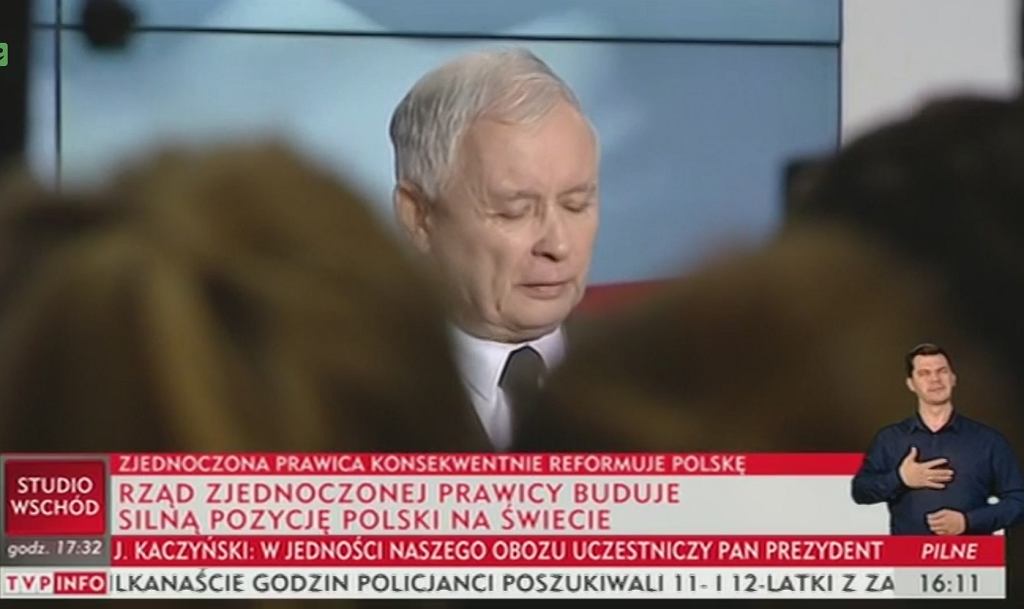
One of the easiest ways of influencing and / or manipulating an audience is through headlines or captions.  Even viewers who have the sound down will see the captions (in Polish paski) used on TVP. It is very often clear from the type of language used whether the news item is positive about the government or negative about the opposition, even where the caption does not refer to a political party.

In a statement issued on 31 May, the Society of Journalists said that their monitoring had made it quite clear that “Public Television acted solely as a propaganda body for the ruling party. All of the electoral material on ‘Wiadomości’ promoted PiS electoral slogans or undermined the opposition’s position. Politicians from the ruling bloc had a huge advantage in terms of access to viewers, and the captions for material read like quotes from speeches at PiS electoral rallies”.

The Society notes that the one billion złoty (€ 231.781,94) given by the government to TVP should be counted as part of the PiS election campaign’s funding and warns that such election campaigning by the public broadcaster undermines electoral freedom.

The authors are also highly critical of the negative role played by the National Council for Radio Broadcasting and Television (KRRiT).  This body is obliged by law to oversee observance of impartiality by the public broadcaster, but has totally failed to react to complaints about TVP over the last three years.

“The transformation of these media into a propaganda tube for the ruling party violates equality of opportunities for rival groups and places in question the fairness and reliability of the elections.  It is, after all, not just through the ballot box that these are rigged.”

Two earlier reports were equally devastating. On 14 March 2019, the Council for the Protection of the Polish Language under the Polish Academy of Sciences sent the Speaker of the Polish Sejm [parliament] its report on the ‘paski’, or captions used by TVP on ‘Wiadomości’.

In his summary of the 150 page report which is based on monitoring covering 2016-2017, the Head of the Council, Dr hab. Andrzej Markowski reported that only 25% of the captions served to inform, with the other 75% mainly used for ‘persuasion’ (influencing the audience); creating reality and for expressive purposes (expressing judgements or emotions). The captions are essentially a tool aimed at influencing the views and judgements of the audience.

The world presented by ‘Wiadomości’ is extremely one-sided, with a dividing line being between the current government and “those who don’t support it”. The actions of the government and ruling party are presented in a way that is unequivocally positive, while the actions of the opposition parties, civic movements or institutions of the EU are assessed without exception negatively. Occasionally differing forms of deprecation are used (irony, mockery, etc.)

The nature of the captions, and the linguistic formulations used in them, mean that people have a fixed view of the event even before they find out any details.

The authors have given a much more detailed linguistic analysis of the same basic rule of presentation noted in the Society of Journalists’ report.  Anything about the actions of the government or its system of values is presented in very positive terms (‘reform’, ‘sovereign’; ‘strong’, ‘hero’; ‘patriotic’, etc.).  “Talking about those critical of the government, the terms used are without exception negative: ‘shocking’; ‘scandalous’; ‘provocation’; ‘putsch’, etc).

Gazeta Wyborcza reported drily on 5 July 2019 that it is TVP’s captions that have proven to be under government ‘protection’. The Council’s report was supposed to have been adopted by the Sejm’s cultural commission, but was not. This is a development which is, apparently, unprecedented.

The third report was, in fact, the first chronologically, although the last to finally be made public.  The report was commissioned by KRRiT back in 2017 and prepared by the Pontifical University of John Paul II  [Uniwersytet Papieski Jana Pawła II] in Kraków.  KRRiT then took until May 2019 to post the report on its website, and probably only did so because Gazeta Wyborcza informed its readers on 9 May about the report’s damning assessment of TVP and wrote that KRRiT had been refusing to provide access to it for the last year and a half.

Wyborcza writes that they have received a copy of the report and it “absolutely annihilates TVP“.

The report, according to Wyborcza, says that if you watch public TV, you can get the impression that Poland is a single-party state.  The report criticizes ‘Wiadomości’ for being one-sided; biased and lacking in pluralism, with one political option, that of the ruling PiS party dominating. It found material which can be considered propaganda (praising the government’s achievements, etc.)

KRRiT published the report on 11 June 2019, though with a description and layout that makes it extremely difficult to understand that it contains strong criticism of TVP.

Such behaviour by the body created to ensure that public television is balanced, impartial and pluralistic is a damning indictment of KRRiT itself.  This supposed watchdog is made up of five members, two of whom were appointed by the PiS-controlled Sejm; one by the PiS-controlled Senate and two by President Andrzej Duda, who was elected from PiS. As mentioned earlier, its head, Witold Kołodziejski is himself a PiS councillor (in Warsaw).

The European Commission reacted, albeit rather slowly, to PiS’s attack on the judiciary. The European Court of Justice has already once concluded that PiS’s Law on the Supreme Court was in breach of EU law and is likely to issue another ruling in autumn 2019. Control of public media used for propaganda purposes and to win elections is also surely just as much of an attack on democracy and rule of law