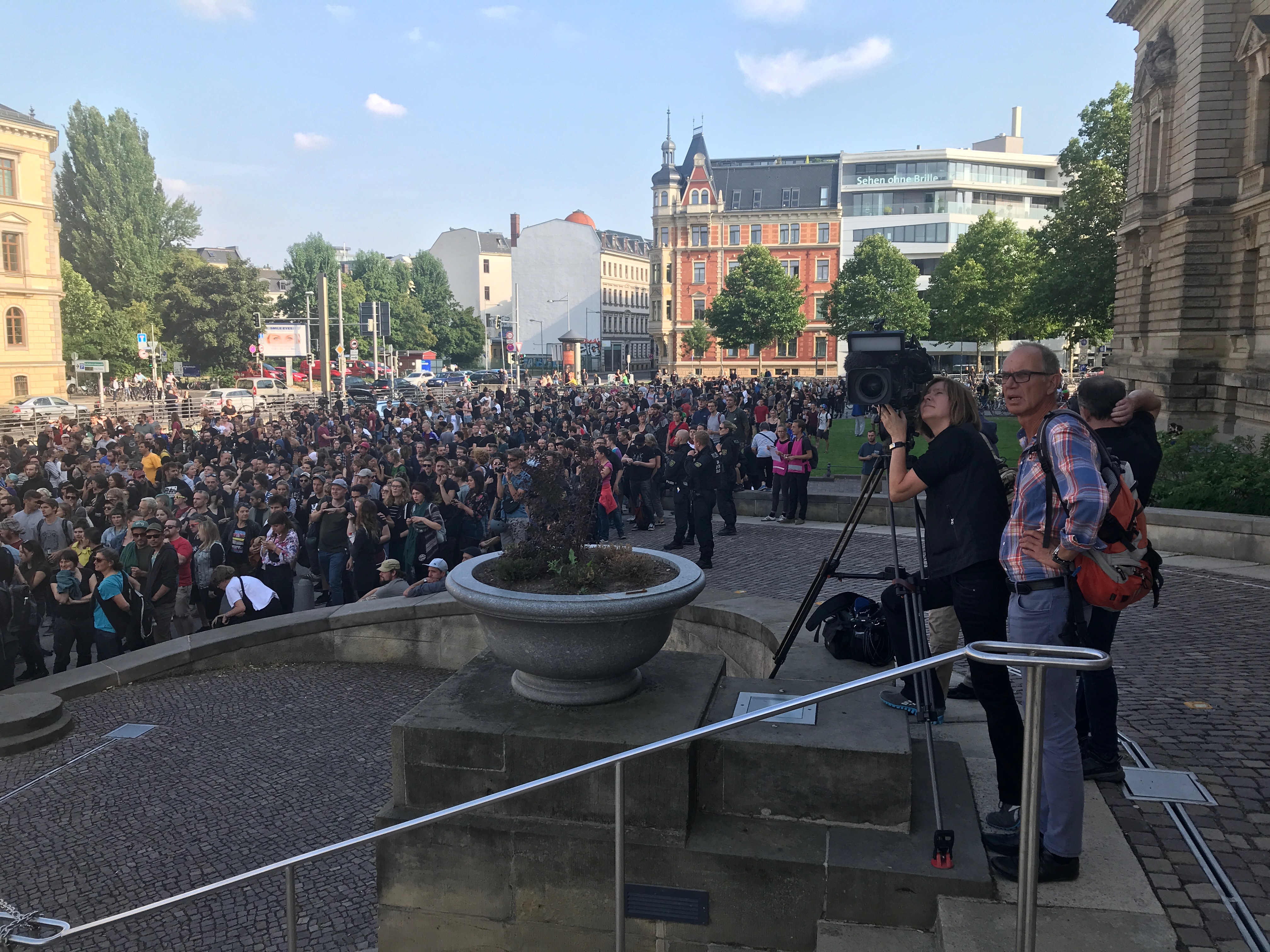
If there were a German federal press freedom index, the Free State of Saxony would rank the lowest. Here, attacks against journalists occur more often than in all the other states, mostly from right-wing protesters. But the police in Saxony are also not the best at defending the rights of reporters to do their jobs.
Protestors gathered to block the deportation of a young Syrian man from Leipzig to Spain on 9. July 2019. They staged a sit-in. Nina Böckmann, a journalist from the left-wing newspaper neues deutschland was on the spot and covered the protest. She told ECPMF the police denied her access more than once despite showing her press card and police pushed her several times as they tried to lead the Syrian man through the crowd. When the situation escalated, the police deployed pepper spray to the crowd and even directly targeted Ms Böckmannn and hit her face – according to herself, she was holding up her press card at that very moment. Two witnesses confirm the statements made by the journalist. A journalist from the local newspaper LVZ was trapped as the police held the demonstrators in a ‘kettle’. When he tried to escape, the police officers tried to push him back. After he showed them his press card, he was accused of “preventing them from doing their work”.
The European Centre for Press and Media Freedom (ECPMF) has been monitoring violence against German journalists since 2015 and producing annual reports called Concept of the Enemy. This work has been recognised in a new written answer from the federal parliament (Bundestag) in response to an MP’s questions about press freedom in Germany and throughout Europe.
The Concept of the Enemy report from 2018 found that, after a short lull, violence against journalists in Germany is on the rise again. In 2018, 22 physical attacks against journalists occurred in Germany. This statistic almost reached the peak of 2015 (with 28 attacks). The assaults almost exclusively occurred around right-wing populist (PEGIDA link to wiki) or far-right neo-Nazi gatherings.
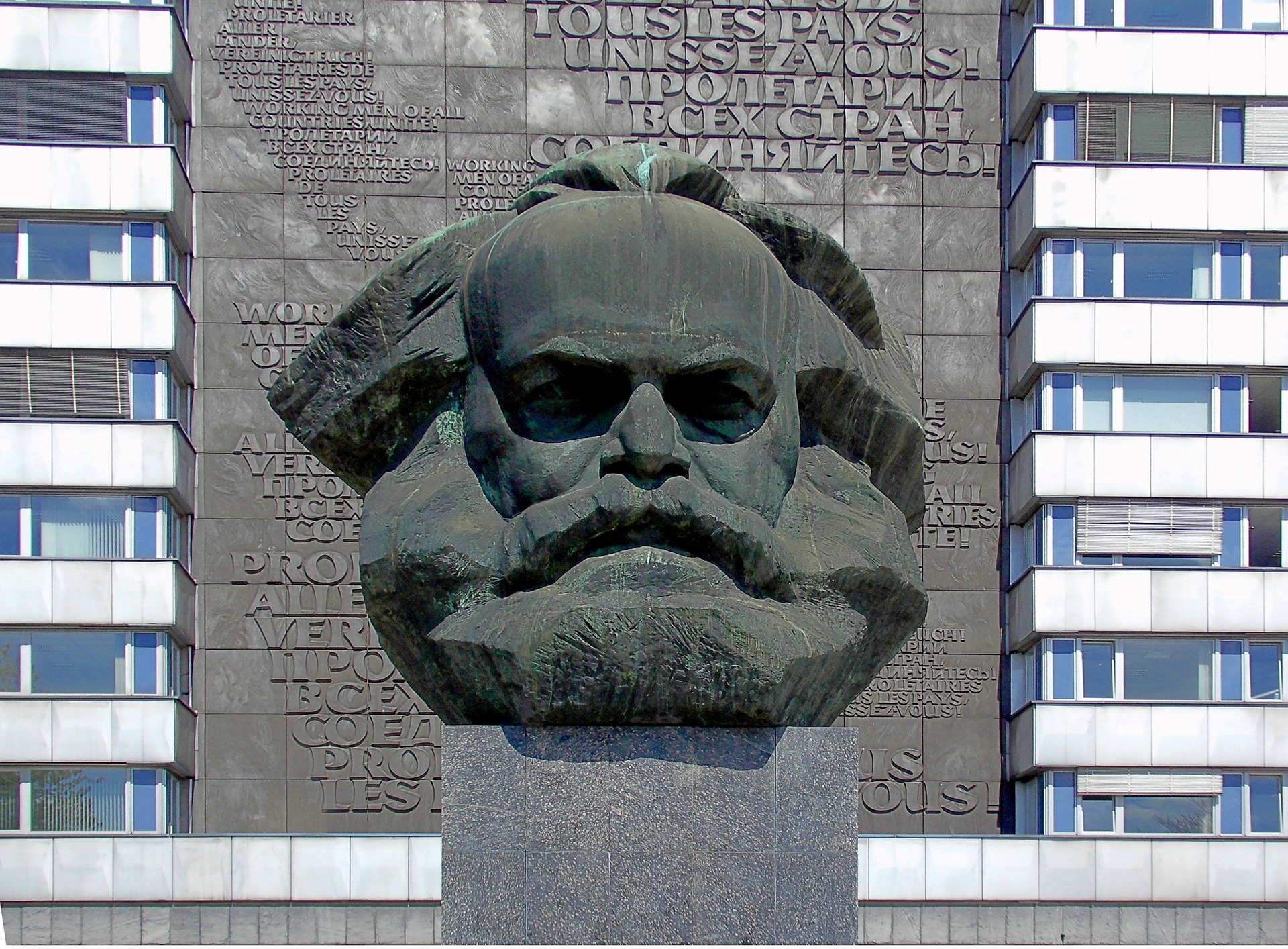
It is striking that 13 of the 2018 assaults took place in Saxony. The Free State even leads the “table of shame” for all years since the ECPMF started its Germany-wide monitoring of the attacks. In the city of Chemnitz, 11 of the assaults occurred on 1. September 2018 during a demonstration where 7500 people from right-wing movements joined neo-nazis in a mock ‘funeral march’ following the murder of a young man, Daniel H., marchers attacked reporters, camera crews and photographers by kicking, hitting or even spitting on them. Ine Dippmann, chair of the Saxony journalists’ association (DJV), said in an interview with the newspaper ZEIT: “I haven’t experienced such severe attacks against journalists at demonstration sites before now.” A Syrian asylum seeker has been charged in connection with the death. Racial tensions in Chemnitz, formerly known as Karl Marx Stadt, are so high that the murder trial is being held in the state capital Dresden, with jurors taken to Chemnitz in June 2019 in order to observe a re-construction of the crime scene.
Journalists do not only face hostility from protestors. It is a basic legal right that journalists can cover demonstrations and the police are supposed to ensure that they can do their work. However in Saxony not all police officers are aware of this. In August 2018, a camera crew from the public service broadcaster ZDF was covering a demonstration of the right-wing movement PEGIDA in the Saxonian capital Dresden. After insulting the journalists as “lying press”, a protester approached the camera operator and tried to prevent him from filming. Another protester hit the camera. The police asked the cameraman to stop filming. The police took them away from the position where they were due to film the arrival of Chancellor Angela Merkel and held them there whilst they twice check their credentials. When reporter Arndt Ginzel asked a police officer what criminal offence they were supposed to have committed, he did not receive a reply. Then the protester accused the journalists of insulting him. This was a mistake – it was another man who had insulted him – and the camera team offered to clarify the situation by showing the police their video material. The police officers refused and instead filed a complaint against the journalist and camera operator. They were prevented from filming for 45 minutes, and this meant they could not cover the demonstration properly.
The reporter and camera operator have both been rewarded for this and other examples of defending the rights of journalists against police obstructiveness and right-wing aggression. They are to receive the Media Foundation of the Sparkasse Leipzig Prize for Freedom and Future of the Media in October 2019, together with Austrian TV presenter Armin Wolf.
Far-right extremist violence against journalists increased not only in Saxony though. Following the events of the murderer of the local German politician Walter Lübcke, militant right-wing groups pursue to threat those who publicly take action against racism and fascism or even only stand for a humanitarian refugee policy such as Lübcke.
On 29 June, the journalist David Janzen received a death threat in the form of a written message saying “We are going to kill you Janzen”, on one of his Windows. Janzen is also a spokesperson for an alliance against right and has been target of threats from right extremists before. Underneath the written threat, stuck a sticker of the right extremist group “Adrenalin Braunschweig”. A week earlier, the suspected perpetrator, a 20 year old previously convicted, published a video on Facebook where he threatened Janzen, saying “Today Walter, tomorrow Janzen”.
On 3 July, two journalists that are reporting over the right extremist and Neonazi scene for the WDR in Dortmund, received a letter with white powder in it. One of the letters was adressed directly to the regional studio of the WDR, while the other one was sent to the private adress of a freelance journalist. Specialists secured and examined the letters and indicated as not dangerous material.
Training courses have been recommended because of the unsafe working conditions for journalists at political demonstrations. The ECPMF, together with the then Leipzig police chief Bernd Merbitz developed a training module. After the pilot project in May 2016 with riot police in Leipzig, the police chief passed on the concept to the Saxony Interior Ministry for approval. And the Saxony journalists’ union DJV is recruiting journalists to take part in new training schemes and promote better understanding between media workers and the forces of law and order.