Each week, Index on Censorship’s Mapping Media Freedom project verifies threats, violations and limitations faced by the media throughout the European Union and neighbouring countries. Here are recent reports that give us cause for concern.

Each week, Index on Censorship’s Mapping Media Freedom project verifies threats, violations and limitations faced by the media throughout the European Union and neighbouring countries. Here are recent reports that give us cause for concern.
Each week, Index on Censorship’s Mapping Media Freedom project verifies threats, violations and limitations faced by the media throughout the European Union and neighbouring countries. Here are recent reports that give us cause for concern.

With a well-developed public service TV and Radio sector, press subsidies and political stability, being a journalist in Sweden is a touch easier than many other places around the world. Sweden is also relatively good at protecting journalists, and though they have had their disagreements, the state and political parties are broadly supportive of open, well-funded journalism. As a foreign correspondent, it is also a refreshingly easy country to work in, with people usually willing and ready to talk to the press.
A spectre that has haunted Swedish journalism for decades is anti-democratic extremism, a phenomenon given new impetus by the rise of mainstream nationalist politics in recent years. Journalists have been labelled as “cultural Marxists” and members of the so-called pk-elit, shorthand for the politically correct elite, by members of old white power organisations and the newer alt-right movements alike.
Much of the far-right view Sweden’s generally liberal newspapers and its public broadcasters as part of a shadowy agenda that is failing to report on the real issues, covering up crimes by immigrants and mounting a propaganda campaign against nationalist movements. As well as specific journalists, hatred of the media, in general, is widespread. The result is an ongoing campaign of intimidation and death threats. Read More
This report is also available in PDF format
In 2016, a total of 1,387 reports of threats, limitations and violations to press freedom were verified by Mapping Media Freedom’s network of correspondents, partners and other sources based in Europe.
During 2016, nine journalists were killed; 205 were assaulted; 347 were detained or arrested; there were 178 reports of criminal charges and lawsuits; 390 reports of intimidation, which includes psychological abuse, sexual harassment, trolling/cyberbullying and defamation; media professionals were subject to attacks to their property 143 times; journalists or sources were blocked 299 times; and journalists’ work was altered or censored 102 times.
Each week, Index on Censorship’s Mapping Media Freedom project verifies threats, violations and limitations faced by the media throughout the European Union and neighbouring countries. Here are recent reports that give us cause for concern.
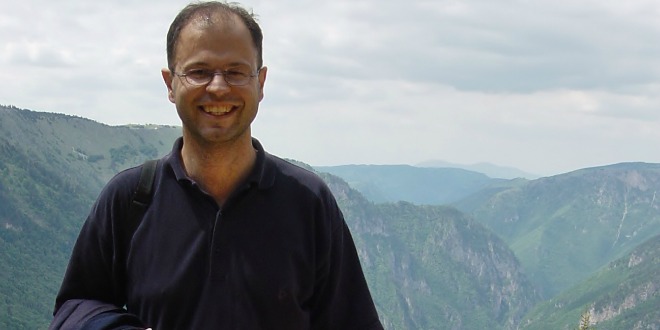
Independent journalist Jovo Martinovic’s arrest with 13 other individuals during a joint Croatian and Montenegrin police operation on 22 October 2015 began an ongoing ordeal.
Martinovic was taken into custody “on reasonable suspicion that he committed criminal offence – creation of criminal organisation and unauthorised production, possession and distribution of narcotics”, according to Montenegro’s ministry of justice. Media reports explained the case more colloquially: Martinovic was detained for allegedly facilitating a meeting between drug dealers and buyers, and helping them to install a messaging app on their smartphones that is allegedly untraceable by the police. Read More


Mapping Media Freedom documents press and media freedom violations across Europe. The documented incidents are publicly accessible and can be explored, filtered and searched through the interactive Alert Explorer. Quantitative and qualitative analysis providing deeper insights and statistics about the press freedom situation in Europe is published within regular monitoring reports and fact sheets.
This project is run by the Media Freedom Rapid Response (MFRR), a Europe-wide mechanism, which tracks, monitors, and reacts to violations of press and media freedom in EU Member States and candidate countries. This project provides legal support, public advocacy, and information to protect journalists and media workers.

 All content available on the Mapping Medea Freedom website is licensed under a Creative Commons Attribution-NonCommercial-ShareAlike 4.0 International License.