Each week, Index on Censorship’s Mapping Media Freedom project verifies threats, violations and limitations faced by the media throughout the European Union and neighbouring countries. Here are recent reports that give us cause for concern.

Each week, Index on Censorship’s Mapping Media Freedom project verifies threats, violations and limitations faced by the media throughout the European Union and neighbouring countries. Here are recent reports that give us cause for concern.

A few days before the 2 April 2017 Serbian presidential elections, a picture was posted on Twitter that caused an unexpected storm.
The picture, taken three days before the vote, which was widely expected to be won by the current prime minister Aleksandar Vucic, showed a copy of each daily newspaper from that day laid out on a table. Yet every paper looked the same. Each was wrapped in a blue, red and white election campaign poster of Vucic’s Serbian Progressive Party (SNS).
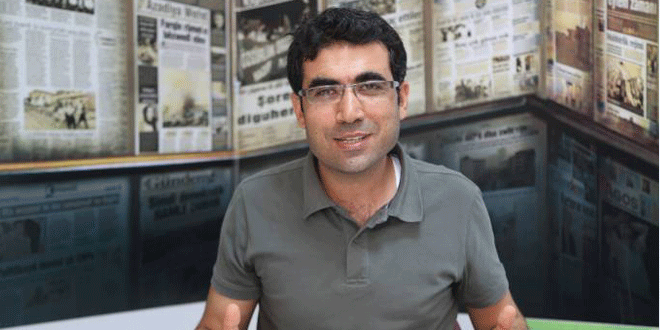
“Of course my family are worried. Who in this country isn’t worried?” says Ramazan Ölçen, who was detained for owning the copyrights to Azadiya Welat (Freedom of the country), what was Turkey’s only Kurdish-language daily newspaper. It was shut down by a cabinet decree issued under Turkey’s state of emergency, which has been in place since 20 July 2016.
“On 4 March 2017, at around 6am, special operations officers and counterterrorism police raided my house [in Diyarbakır], which was completely unnecessary,” he says. “I would have voluntarily gone and testified if the prosecutor’s office had sent me a notice.”
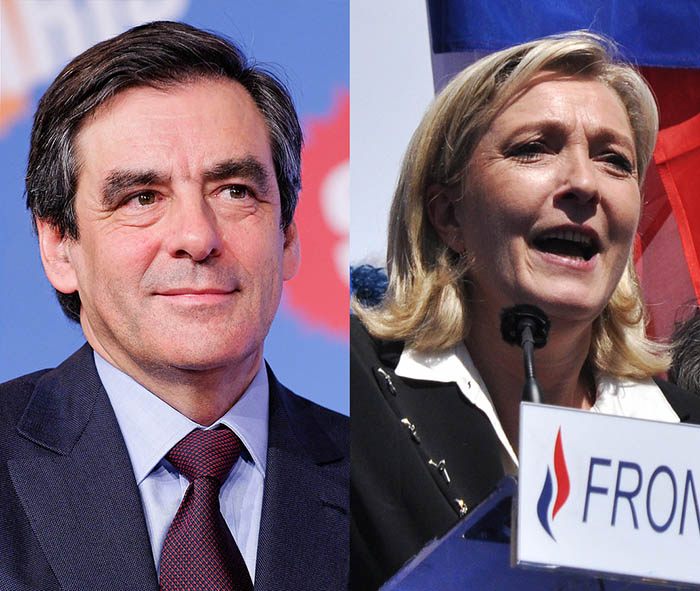
“No revelation on François Fillon for several minutes,” a headline from the French satirical website Le Gorafi read in March 2017. Although untrue, it captured well the spirit of a campaign marred by a steady flow of allegations of political corruption. Fillon, the presidential candidate for the conservative Les Républicains party, is one of many to face allegations. In response, he has attempted to discredit the press.
Each week, Index on Censorship’s Mapping Media Freedom project verifies threats, violations and limitations faced by the media throughout the European Union and neighbouring countries. Here are recent reports that give us cause for concern.
Russian and international journalists who were covering anti-corruption protests that took place across Russia on Sunday 26 March 2017 were among those detained as police moved to disperse demonstrators.
The protests erupted following allegations of hidden assets amassed by Russian Prime Minister Dmitry Medvedev. A video detailing the investigation conducted by the Russian NGO Anti-corruption Foundation attracted nearly 20 million views and caused a wave of public indignation.


Mapping Media Freedom documents press and media freedom violations across Europe. The documented incidents are publicly accessible and can be explored, filtered and searched through the interactive Alert Explorer. Quantitative and qualitative analysis providing deeper insights and statistics about the press freedom situation in Europe is published within regular monitoring reports and fact sheets.
This project is run by the Media Freedom Rapid Response (MFRR), a Europe-wide mechanism, which tracks, monitors, and reacts to violations of press and media freedom in EU Member States and candidate countries. This project provides legal support, public advocacy, and information to protect journalists and media workers.

 All content available on the Mapping Medea Freedom website is licensed under a Creative Commons Attribution-NonCommercial-ShareAlike 4.0 International License.