All Posts By

Mapping Media Freedom

Yavuz Baydar: A noble profession has turned into a curse

By | Mapping Media Freedom, Turkey Uncensored
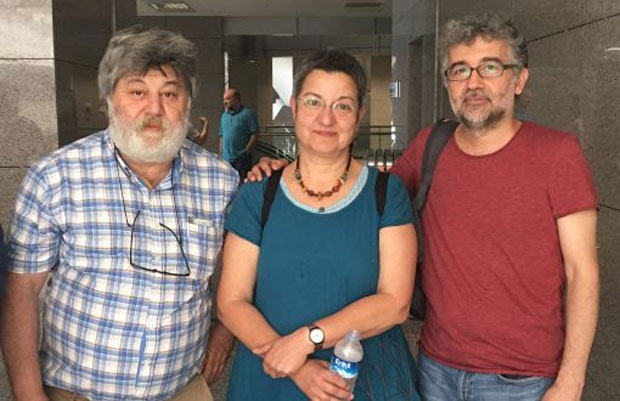
From left, Ahmet Nesin (journalist and author), Şebnem Korur Fincancı (President of Turkey Human Rights Foundation) and Erol Önderoğlu (journalist at Bianet and RSF Turkey correspondent). (Photo: © Bianet)

From left, Ahmet Nesin (journalist and author), Şebnem Korur Fincancı (President of Turkey Human Rights Foundation) and Erol Önderoğlu (journalist at Bianet and RSF Turkey correspondent). (Photo: © Bianet)

By Yavuz Baydar

I have known Erol Önderoğlu for ages. This gentle soul has been monitoring the ever-volatile state of Turkish journalism more regularly than anybody else. His memory, as the national representative of the Reporters Without Borders, has been a prime source of reference for what we ought to know about the state of media freedom and independence.

On 20 June, perhaps not so surprisingly, we all witnessed Erol being sent to pre-trial detention, taken out of the courtroom in Istanbul in handcuffs.
Read more

Yavuz Baydar: “Judicial coup” sends clear warning to Turkey’s remaining independent journalists

By | Mapping Media Freedom, Turkey Uncensored
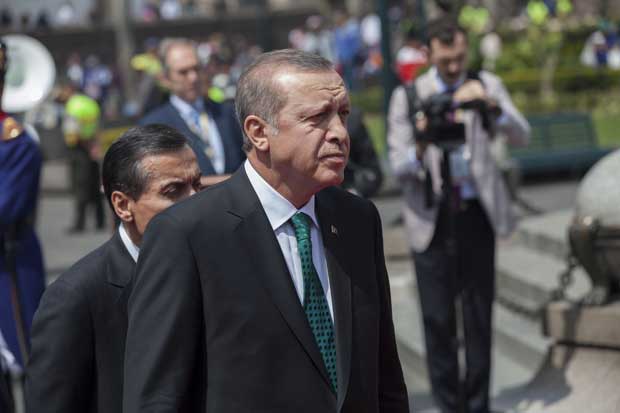
Turkey's president, Recep Tayyip Erdoğan, during a state visit to Ecuador in February 2016. (Photo: Cancillería del Ecuador via flickr

Turkey’s president, Recep Tayyip Erdoğan, during a state visit to Ecuador in February 2016. (Photo: Cancillería del Ecuador via flickr)

By Yavuz Baydar

Nothing could illustrate the course of developments in Turkey better than the case of prosecutor Murat Aydın.

In what was described as a “judicial coup” in critical media, Aydin was one of 3,746 judges and prosecutors, who were reassigned in recent days, an unprecedented move that has shaken the basis of the justice system. Some were demoted by being sent into internal “exile”, some were promoted.

Read more

Dunja Mijatović: Why quality public service media has not caught on in transition societies

By | Croatia, Hungary, Mapping Media Freedom

map-europe

Since the 1920s, generations of western Europeans got used to the monopoly of public radio and later public television. These broadcasters developed strategies to better serve audiences and distance themselves from governments. The arrival of private broadcasters, in many cases taking place only in the 1970’s, was generally viewed as a complimentary service aimed at entertaining the public. Although public service broadcasting lost market share, it remained a respected institution in society; necessary to bring up youth, to get an objective picture of the world and cater to the interests of minorities. Read More

Russia: Journalists and activists end up targeted for revealing business corruption

By | European Union, Mapping Media Freedom, Russia

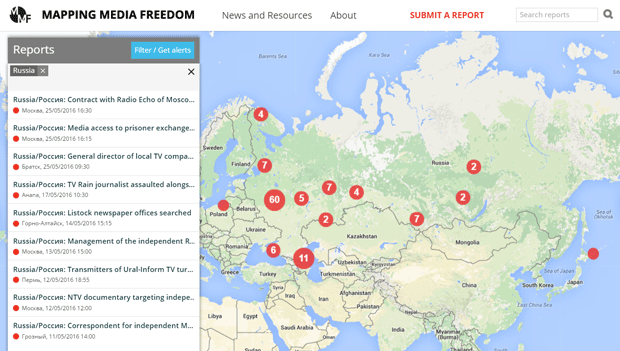
russia-mmf-020616

In Russia, business interests are protected by the state. When human rights violations or environmental damage are reported, nepotism and corrupt dealings between officials and business usually plays a large role. In these cases, no matter how serious the allegations or how strong the evidence, business owners skirt trouble while journalists and bloggers face real problems.

Read More