Each week, Index on Censorship’s Mapping Media Freedom project verifies threats, violations and limitations faced by the media throughout the European Union and neighbouring countries. Here are five recent reports that give us cause for concern.

Each week, Index on Censorship’s Mapping Media Freedom project verifies threats, violations and limitations faced by the media throughout the European Union and neighbouring countries. Here are five recent reports that give us cause for concern.
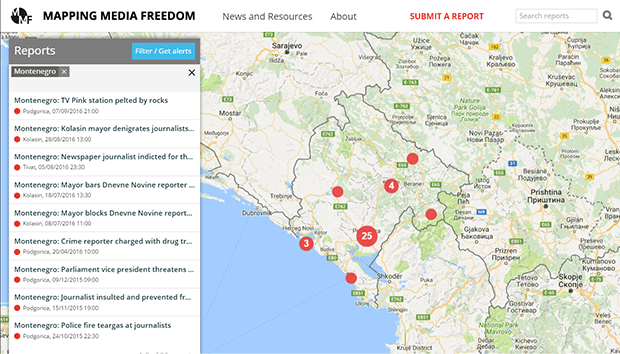
In the past two months three threats to media freedom involving the mayor of Kolasin, a town in Montenegro, have been reported to Mapping Media Freedom.
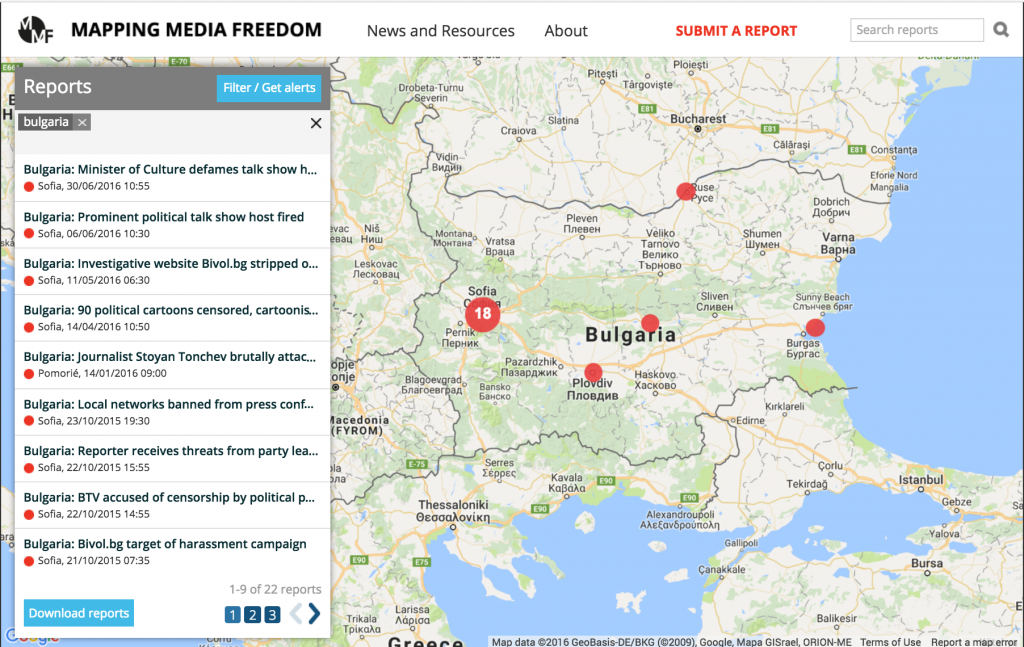
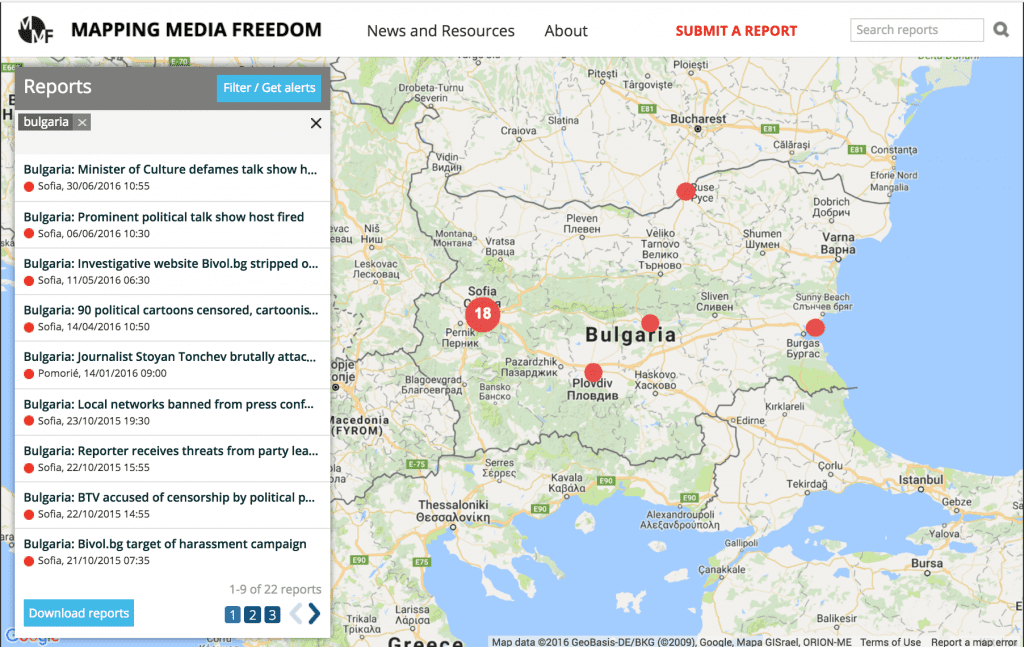
Between 2013 and 2015, 10 Bulgarian municipalities spent a total of 2.7 million Bulgarian lev ($1.54 million) – mainly to media companies and PR agencies – in return for positive coverage of their activities, an investigative series by news site Dnevnik.bg found.
Each week, Index on Censorship’s Mapping Media Freedom project verifies threats, violations and limitations faced by the media throughout the European Union and neighbouring countries. Here are five recent reports that give us cause for concern.
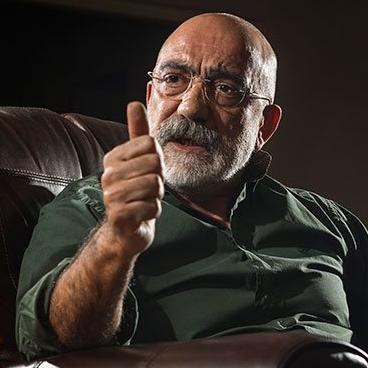
By Yavuz Baydar
If made out of the right stuff a journalist is a tough nut. Some of us are, you may say, born that way. Our profession lives in our cells. We are compelled to do what our DNA instructs us to do.
Yet, these days, I can’t help waking up each morning in a state of gloom.
Never before have we, Turkey’s journalists, been subjected to such multi-frontal cruelty. Each and every one of us have at least one — usually more — serious issue to wrestle with. Many have already faced unemployment. According to Turkey’s journalist unions, more than 2,300 media professionals have been forced to down pens since the coup attempt. The silenced face a dark destiny: they will never be rehired by a media under the Erdogan yoke.
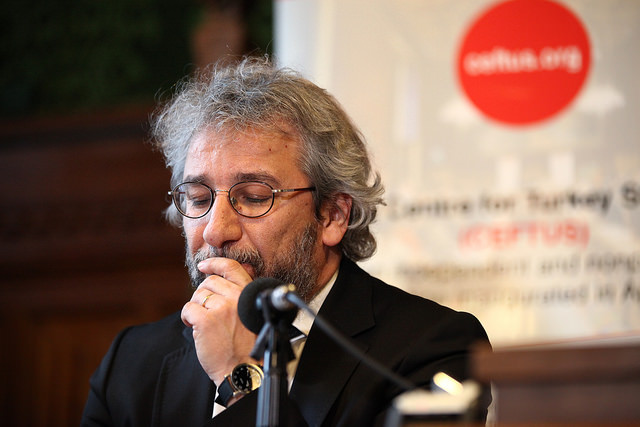
Can Dündar, Houses of Commons, 29 June. Credit: Flickr / Centre for Turkey Studies
By Can Dündar
In mobster movies the bad guys always kidnap the wife of the protagonist. They’ll phone the husband to say: “We have your wife. Do as we tell you otherwise she’s gone.”
I had not imagined that a state could become no better than a criminal syndicate. But the Turkish state has become one.


Mapping Media Freedom documents press and media freedom violations across Europe. The documented incidents are publicly accessible and can be explored, filtered and searched through the interactive Alert Explorer. Quantitative and qualitative analysis providing deeper insights and statistics about the press freedom situation in Europe is published within regular monitoring reports and fact sheets.
This project is run by the Media Freedom Rapid Response (MFRR), a Europe-wide mechanism, which tracks, monitors, and reacts to violations of press and media freedom in EU Member States and candidate countries. This project provides legal support, public advocacy, and information to protect journalists and media workers.

 All content available on the Mapping Medea Freedom website is licensed under a Creative Commons Attribution-NonCommercial-ShareAlike 4.0 International License.